
 totaladmin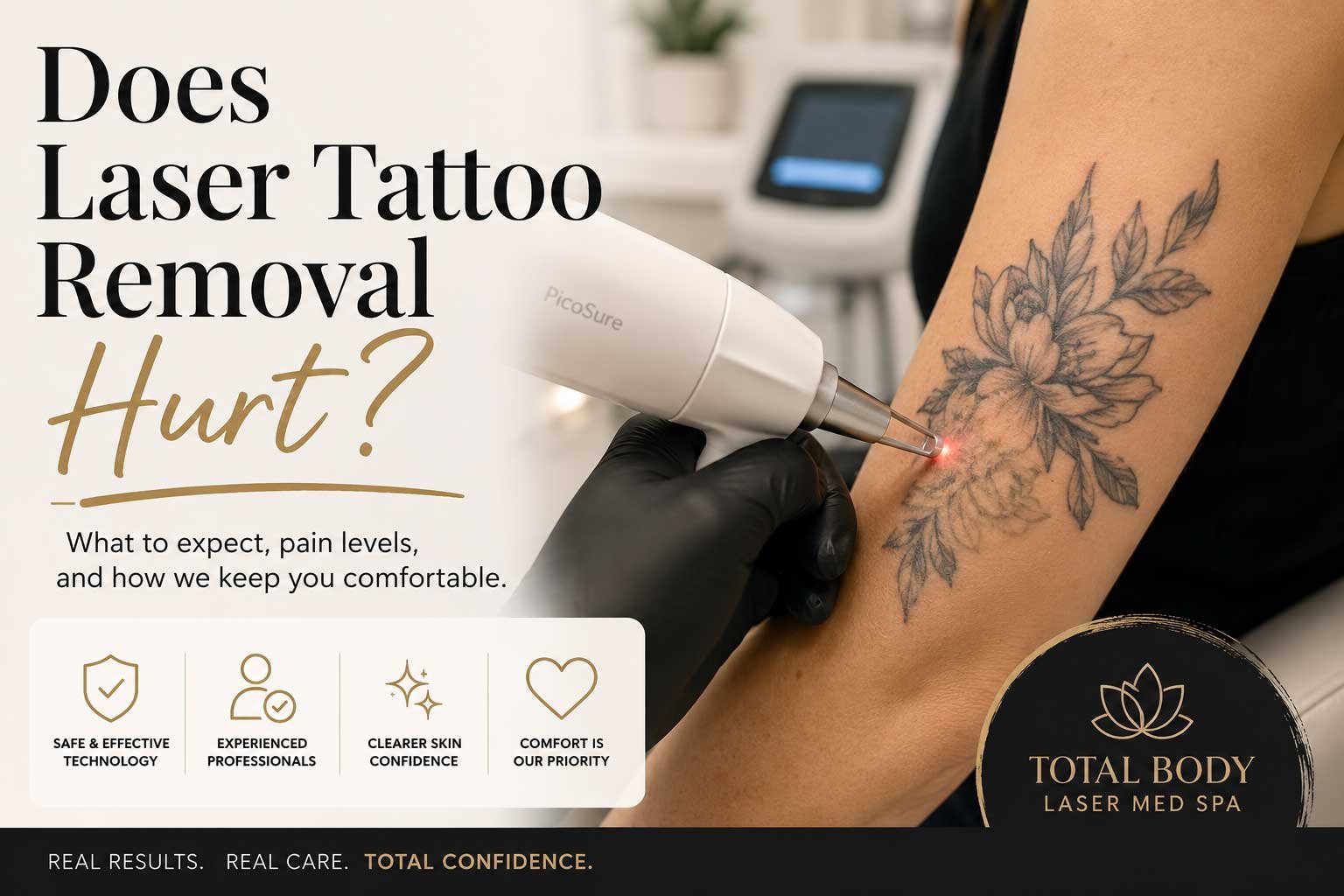
Does laser tattoo removal hurt? It is one of the most common questions people ask before booking a consultation.
The honest answer is yes — laser tattoo removal can be uncomfortable. However, most people are surprised that it is much faster and more manageable than they expected. In fact, many clients say getting the original tattoo was actually more painful than removing it.
Modern laser tattoo removal technology has improved dramatically over the years. Today’s advanced systems are designed to target tattoo ink more precisely while helping minimize unnecessary damage to surrounding skin. Combined with cooling methods, numbing options, and experienced providers, treatments are significantly easier than many people imagine.
Many first-time clients researching does laser tattoo removal hurt are often surprised by how quick modern treatments actually are.
At Total Body Laser Med Spa, many clients come in nervous about the pain but leave relieved after realizing the sessions are quick and highly tolerable.
Some clients spend years covering a tattoo with clothing or makeup before finally deciding to remove it. In many cases, the tattoo itself matters less over time than the feeling attached to it.
This guide explains:
- What laser tattoo removal actually feels like
- Which body areas hurt the most
- How pain compares to getting a tattoo
- Ways clinics reduce discomfort
- What healing feels like afterward
- Tips to make treatments easier
What Does Laser Tattoo Removal Feel Like?
When asking does laser tattoo removal hurt, most people are really trying to understand whether the discomfort is manageable during short treatment sessions.
People describe laser tattoo removal in different ways depending on their pain tolerance, tattoo location, and skin sensitivity.
Some of the most common descriptions include:
- A rubber band snapping against the skin
- Hot grease splattering briefly
- Tiny fast pinpricks
- Short bursts of heat
- Mild stinging or burning
The good news is that sessions are usually very fast.
Small tattoos may only take a few minutes to treat, while larger pieces may take longer depending on coverage and ink density.
Most clients find the anticipation is worse than the actual treatment.
Many people walk into their first appointment expecting the worst, only to realize afterward that the anxiety leading up to treatment was harder than the session itself.
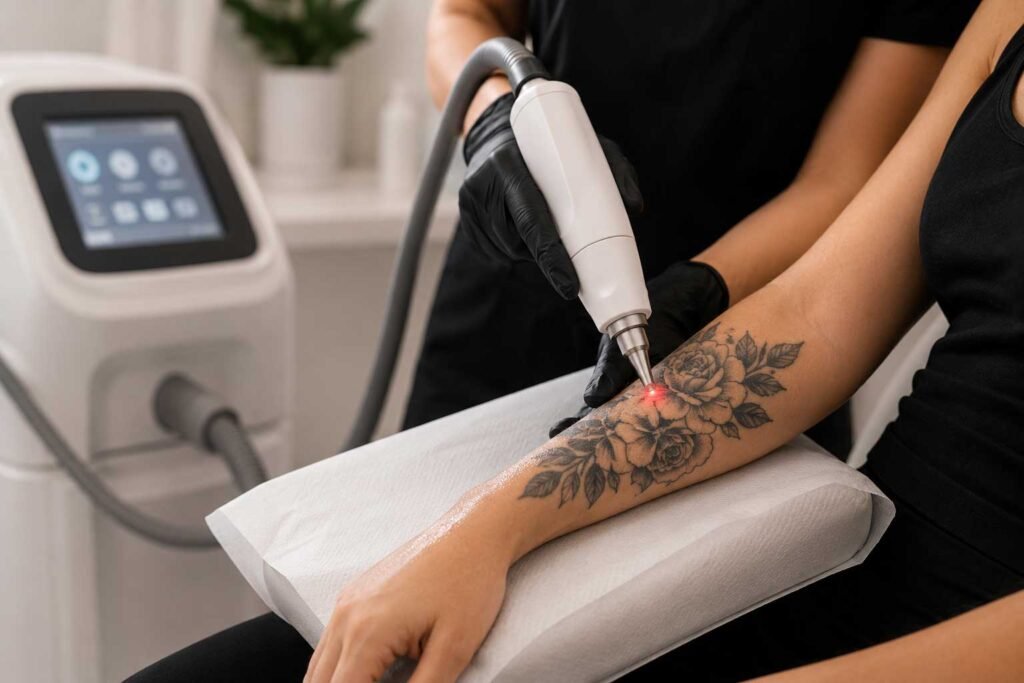
The Pain Usually Comes in Short Bursts
Unlike a tattoo session that may last for hours, laser tattoo removal is typically much shorter.
The laser delivers extremely fast pulses that target the ink particles beneath the skin. Each pulse lasts only a fraction of a second.
That means discomfort usually happens in quick bursts rather than prolonged continuous pain.
For many clients, the speed of treatment makes a major difference psychologically.
Does Tattoo Removal Hurt More Than Getting a Tattoo?
This varies from person to person, but many clients compare the discomfort level to getting tattooed.
Some say tattoo removal hurts slightly more. Others say getting tattooed was worse. Some feel they are very similar.
The biggest difference is usually treatment time.
A tattoo session can last multiple hours depending on the size and detail of the artwork. Laser tattoo removal treatments are generally much shorter.
Even when the sensation feels intense for brief moments, most people tolerate it well because the session ends quickly.
Why Tattoo Removal Feels Different
Tattoo machines repeatedly penetrate the skin with needles.
Laser tattoo removal works differently.
The laser energy passes through the skin and specifically targets tattoo pigment. The heat rapidly breaks the ink into tiny particles that your body gradually clears away naturally over time.
That rapid heat and energy transfer creates the snapping or stinging sensation people describe.
Which Tattoo Locations Hurt the Most?
Pain levels can vary significantly depending on where the tattoo is located.
Areas with thinner skin, more nerve endings, or less fat padding often feel more sensitive.
Most Sensitive Areas
These areas are often considered more uncomfortable during tattoo removal:
- Ankles
- Feet
- Hands
- Fingers
- Ribs
- Spine
- Neck
- Face
- Elbows
- Knees
- Inner wrists
Easier Areas for Many Clients
- Ankles
- Feet
- Hands
- Fingers
- Ribs
- Spine
- Neck
- Face
- Elbows
- Knees
- Inner wrists
These body areas are often more tolerable:
- Upper arms
- Shoulders
- Thighs
- Calves
- Outer forearms
- Upper back
However, everyone experiences pain differently.
Someone with a high pain tolerance may barely react to an area another person finds extremely sensitive.
What Factors Affect Laser Tattoo Removal Pain?
Several things can influence how laser tattoo removal feels.
Tattoo Location
Areas with thinner skin or more nerves tend to feel more intense.
Tattoo Size
Larger tattoos require longer treatment sessions, which may increase discomfort simply because more skin is being treated.
Ink Density
Heavy, saturated tattoos often require more laser energy and additional sessions.
Dense black ink may react differently than lighter faded ink.
Skin Sensitivity
Some people naturally have more sensitive skin than others.
Hydration, stress, lack of sleep, and even caffeine intake can sometimes influence sensitivity levels.
Type of Laser Used
Modern laser systems can improve comfort and efficiency significantly.
Advanced technologies often target ink more precisely and reduce unnecessary skin trauma compared to older systems.
Provider Experience
An experienced laser technician knows how to adjust settings safely and effectively based on your tattoo, skin type, and goals.
How Clinics Help Reduce Tattoo Removal Pain
Professional clinics use several methods to make treatments more comfortable. Professional providers understand that concerns about whether does laser tattoo removal hurt can prevent some people from scheduling consultations.
Numbing Cream
Topical numbing creams are commonly applied before treatment.
These creams help reduce surface discomfort and can make a noticeable difference for many clients.
Cooling Systems
Cold air cooling devices or cooling techniques help calm the skin during treatment.
Cooling not only improves comfort but can also help minimize inflammation.
Short Treatment Sessions
One advantage of laser tattoo removal is that sessions are usually quick.
Even larger tattoos are often broken into manageable treatments.
Experienced Treatment Settings
Proper laser settings matter.
A trained provider adjusts the treatment safely for your tattoo color, depth, skin type, and body location.
What Does the Skin Feel Like Afterward?
After treatment, the area may feel similar to a mild sunburn.
Common temporary side effects include:
- Redness
- Swelling
- Warmth
- Mild tenderness
- Frosting or whitening immediately after treatment
- Slight itching during healing
These reactions are normal parts of the healing process.
Most side effects improve over several days.
Blistering Can Happen
Some clients experience temporary blistering.
This can sound alarming, but mild blistering is actually a common response during tattoo removal healing.
Proper aftercare is extremely important.
The American Academy of Dermatology also recommends following professional aftercare instructions carefully to help support healthy healing after laser tattoo removal treatments.
Following your provider’s instructions carefully helps protect the skin and support healthy healing.
Tattoo Removal Healing Timeline
Every person heals differently, but most clients experience a general healing pattern. Even though does laser tattoo removal hurt is a common concern, many clients say the healing process was easier than expected when proper aftercare was followed.
First 24 Hours
The area may look red, swollen, or slightly raised.
Some people notice frosting immediately after treatment, which is a temporary whitening effect caused by the laser.
Days 2–7
Tenderness usually improves.
Mild itching or dryness may occur.
Some blistering or scabbing can develop depending on the treatment intensity.
Weeks After Treatment
Your body gradually breaks down and clears fragmented ink particles.
Fading becomes more noticeable over time.
Multiple sessions are usually required because tattoo ink sits at different depths in the skin.
You can also read our complete Laser Tattoo Removal Aftercare Guide.
Helpful Tattoo Removal Aftercare Products
The right aftercare products can make healing more comfortable and help protect sensitive skin during the recovery process after laser tattoo removal treatments.
Affiliate Disclosure: This article may contain affiliate links. If you purchase through these links, we may earn a commission at no additional cost to you.
| Product | Why It Helps | Check Price |
|---|---|---|
| Fragrance-Free Healing Balm | Helps soothe irritated skin after treatment | Check Price on Amazon |
| Cooling Ice Packs | Helps reduce swelling and discomfort | Check Price on Amazon |
| Gentle Antibacterial Soap | Supports proper healing and cleanliness | Check Price on Amazon |
| SPF 50 Sunscreen | Protects healing skin from UV exposure | Check Price on Amazon |
| Nonstick Gauze Pads | Helps protect sensitive treated areas | Check Price on Amazon |
How Many Tattoo Removal Sessions Are Needed?
Most tattoos require multiple sessions for significant fading or complete removal.
The exact number depends on:
- Tattoo age
- Ink colors
- Ink depth
- Tattoo size
- Skin type
- Immune system response
- Whether the tattoo was professionally done or amateur
Professional tattoos with dense ink often take longer to remove than older faded tattoos.
Black ink typically responds the fastest, while certain colors may require additional treatments.
Learn more in How Many Sessions Does Tattoo Removal Take?
Tips to Make Laser Tattoo Removal Easier
There are several things clients can do to improve comfort before and after treatment.
Stay Hydrated
Well-hydrated skin often responds better to treatment and healing.
Avoid Heavy Sun Exposure
Tanned or sunburned skin may increase sensitivity and complicate treatment.
Get Good Sleep
Being rested can help improve pain tolerance.
Avoid Alcohol Before Treatment
Alcohol may increase sensitivity and irritation for some people.
Follow Aftercare Instructions Carefully
Good aftercare helps minimize complications and supports smoother healing.
Is Laser Tattoo Removal Worth It?
For many people, absolutely.
Some people simply outgrow an old tattoo over time, while others want to remove a design tied to a past relationship, career change, or difficult period in life. Many clients also choose laser tattoo removal to prepare for a cleaner cover-up tattoo or to regain confidence in professional and social settings.
While laser tattoo removal can involve temporary discomfort, many clients feel the results are well worth the process.
Modern technology has made removal safer, more effective, and more manageable than ever before.
Many people say the biggest relief comes after the first session, when they realize the process was not nearly as frightening as they imagined beforehand.
Why Professional Tattoo Removal Matters
Trying to remove tattoos using DIY methods or unqualified providers can increase the risk of:
- How many sessions you may need
- Estimated fading timeline
- What type of results to expect
- How treatments feel
- What aftercare involves
- Whether full removal or fading for a cover-up is best
Professional treatment helps protect your skin while maximizing results.
Choosing an experienced clinic with modern laser technology is extremely important.
Laser Tattoo Removal Consultation in Middleton, Wisconsin
If you are considering tattoo removal and want realistic expectations about discomfort, healing, and results, a professional consultation is the best place to start.
At Total Body Laser Med Spa, clients receive customized treatment plans based on their tattoo, skin type, and goals.
A consultation can help answer questions like:
- How many sessions you may need
- Estimated fading timeline
- What type of results to expect
- How treatments feel
- What aftercare involves
- Whether full removal or fading for a cover-up is best
Why Many Wisconsin Clients Start Tattoo Removal in Fall or Winter
In Wisconsin, many clients prefer beginning laser tattoo removal treatments during fall or winter because reduced sun exposure can make aftercare easier. Covering treated areas with clothing is often more comfortable during colder months, especially for larger tattoos on the arms, legs, or back.
Frequently Asked Questions
Does laser tattoo removal hurt badly?
Most people describe laser tattoo removal as uncomfortable rather than unbearable. The sensation is often compared to a rubber band snapping against the skin.
Is tattoo removal more painful than getting tattooed?
It depends on the individual, but many people say the discomfort level is similar. However, tattoo removal sessions are usually much shorter.
Can numbing cream help?
Yes. Many clinics use topical numbing creams and cooling methods to help improve comfort during treatment.
Which tattoos hurt the most to remove?
Areas with thin skin and many nerve endings — such as ribs, ankles, hands, and feet — are often more sensitive.
How long does laser tattoo removal take?
Small tattoos may only take a few minutes per session. Larger tattoos take longer depending on size and ink density.
Will the skin blister after treatment?
Temporary blistering can happen and is considered a normal healing response for some clients.
How many sessions are usually needed?
Most tattoos require multiple sessions because the ink must be gradually broken down over time.
So, does laser tattoo removal hurt? There is some discomfort involved, but modern laser technology has made the process far more tolerable than many people expect.
Is Laser Tattoo Removal Worth It For You?
So, does laser tattoo removal hurt?
There is some discomfort involved, but most clients find it far more manageable than they expected. Treatments are typically quick, modern lasers are more advanced than ever, and professional clinics use multiple methods to improve comfort.
For people ready to move on from unwanted tattoos, laser tattoo removal offers one of the safest and most effective solutions available today.
If you are considering treatment, scheduling a consultation with an experienced provider can help you understand the process, expected results, and what your personalized treatment plan may look like.
More Topics You Maybe Be Interested:
- Laser Tattoo Removal Aftercare Guide
- How Many Sessions Does Tattoo Removal Take?
- Can You Completely Remove a Tattoo?
- Tattoo Removal Before and After Results
- Best Time of Year for Laser Tattoo Removal
- Can You Remove Colored Tattoos?
- What Happens to Tattoo Ink After Laser Removal?
Why Experience Matters in Laser Tattoo Removal
Laser tattoo removal is not a one-size-fits-all treatment. Tattoo age, ink depth, color, skin tone, and tattoo location all affect how treatments should be performed safely. Working with experienced providers and professional-grade laser technology helps reduce unnecessary skin irritation while improving fading results over time.
Ready To Remove An Unwanted Tattoo?
Thinking about removing an unwanted tattoo? Schedule a consultation with Total Body Laser Med Spa to learn what to expect from laser tattoo removal, how many sessions you may need, and whether partial fading or full removal is the best option for your goals.