
 totaladmin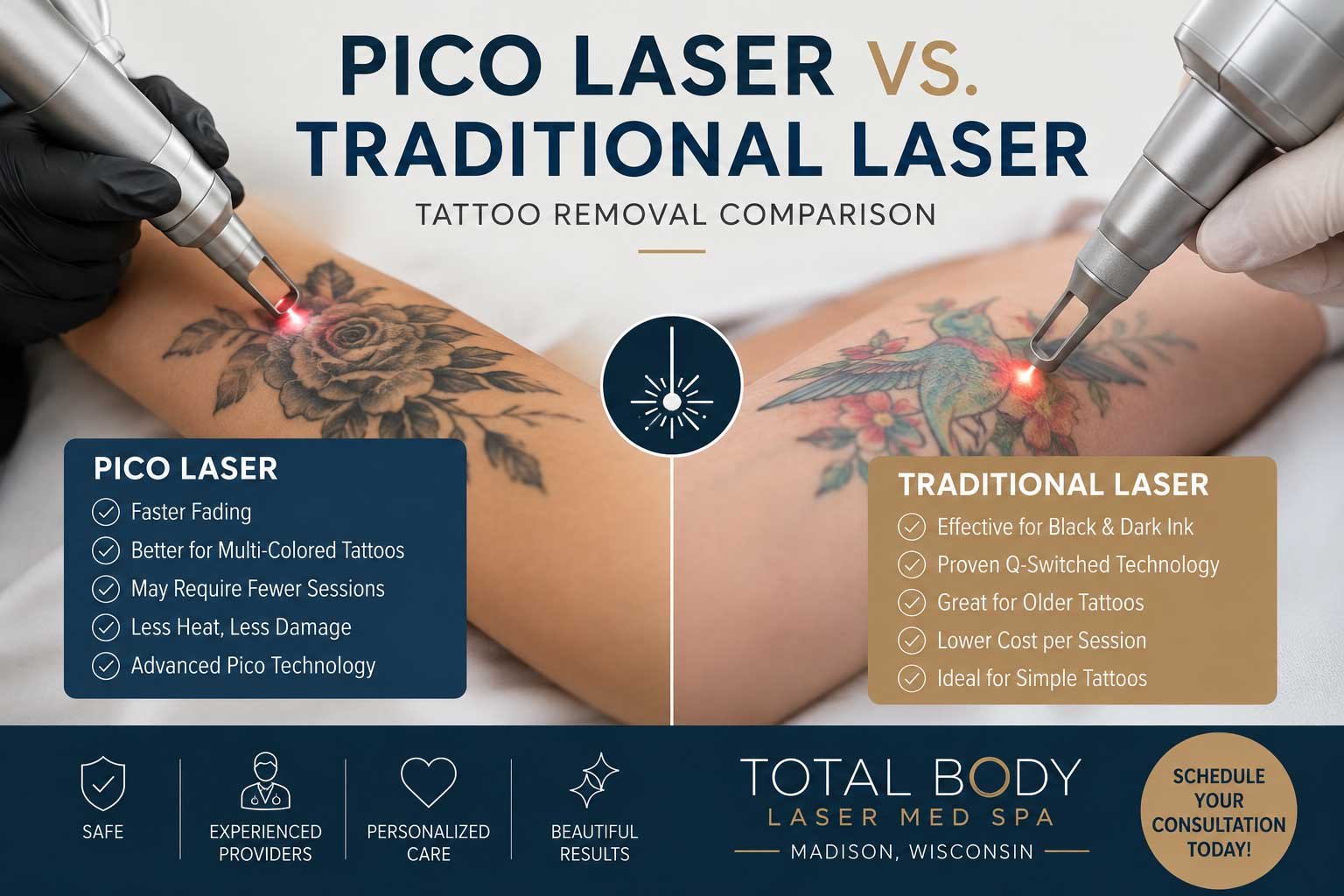
Pico Laser vs Traditional Laser Tattoo Removal is one of the most common comparisons people search for when deciding how to remove an unwanted tattoo. Tattoo removal technology has advanced significantly over the past decade, giving people more options than ever before. If you’re thinking about removing an old tattoo, fading existing ink for a cover-up, or simply exploring your options, understanding how these two laser technologies differ can help you make an informed decision.
At Total Body Laser Med Spa in Middleton, just outside Madison, Wisconsin, many clients ask whether Pico laser treatments are worth the higher cost compared to traditional laser systems. The answer depends on several factors, including your tattoo’s colors, age, size, ink depth, skin type, and the results you hope to achieve.
In this guide, we’ll compare Pico laser and traditional laser tattoo removal side by side, covering how each treatment works, the number of sessions typically required, pain levels, healing time, effectiveness on different ink colors, costs, and which option may be the best fit for your individual goals.
If you’re researching Pico Laser vs Traditional Laser Tattoo Removal, it’s important to understand that both technologies are designed to remove unwanted tattoo ink safely. However, they differ in pulse duration, treatment efficiency, recovery time, and the types of tattoos they remove most effectively.
How Laser Tattoo Removal Works
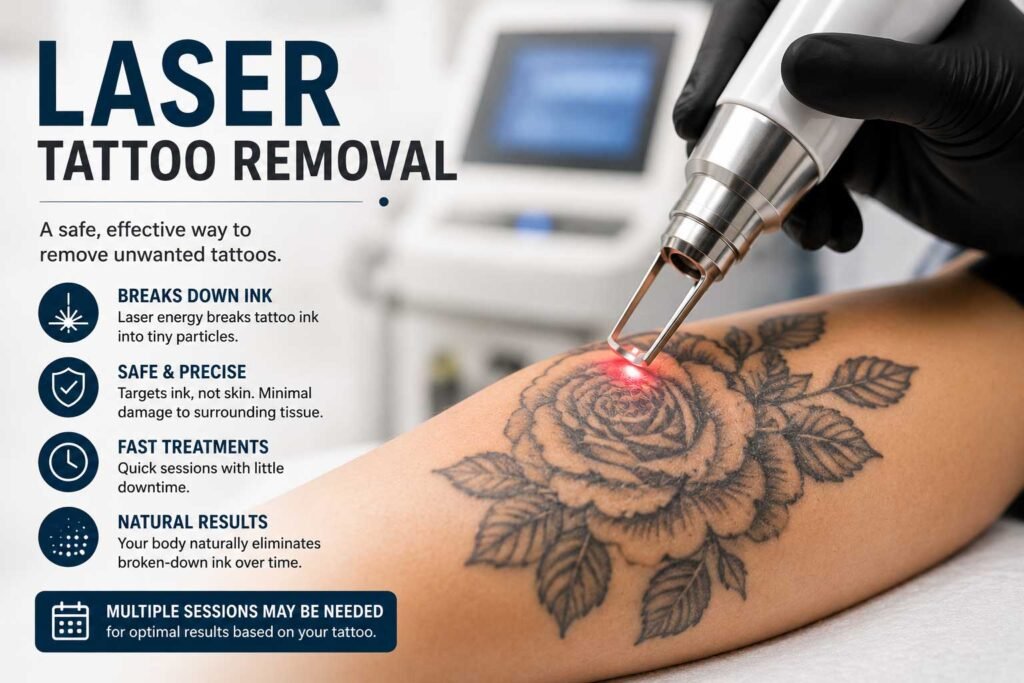
Laser tattoo removal uses highly concentrated pulses of light to target the ink particles embedded beneath the skin. When the laser energy reaches the tattoo pigment, it breaks the ink into tiny fragments. Over the following weeks, your body’s immune system gradually removes these smaller particles through its natural healing process, causing the tattoo to fade with each treatment session.
Laser tattoo removal works by targeting tattoo ink beneath the skin using concentrated pulses of light. According to the American Society for Laser Medicine and Surgery, laser treatments are considered the gold standard for removing unwanted tattoos.
Not all tattoo inks respond the same way to laser treatment. Different laser wavelengths are designed to target specific colors, which is why black and dark blue tattoos are generally the easiest to remove. Brighter shades such as green, turquoise, yellow, and light blue can be more challenging and often require advanced laser technology or additional treatment sessions.
The biggest difference between Pico laser systems and traditional Q-switched lasers is the speed at which they deliver energy. While both technologies are designed to break apart tattoo ink, Pico lasers use ultra-short picosecond pulses that shatter ink into smaller particles more efficiently than the nanosecond pulses used by traditional Q-switched lasers. This difference can lead to faster fading, fewer treatment sessions for some tattoos, and potentially less heat-related damage to the surrounding skin.
Understanding Pico Laser vs Traditional Laser Tattoo Removal starts with knowing how each laser breaks apart tattoo ink beneath the skin. While both methods rely on laser energy, the speed at which that energy is delivered makes a significant difference in treatment performance.
What Is Traditional Laser Tattoo Removal?
When discussing Pico Laser vs Traditional Laser Tattoo Removal, traditional Q-switched lasers remain an excellent choice for many patients, particularly those with older black tattoos or those seeking a lower-cost treatment option.
Traditional laser tattoo removal typically refers to Q-switched laser technology, which has been the gold standard for tattoo removal for many years. These systems have successfully treated millions of tattoos and remain an effective option for removing many types of ink, particularly black and darker pigments.
Q-switched lasers use nanosecond pulse technology, meaning they deliver laser energy in billionths of a second. These rapid bursts of energy break larger tattoo ink particles into smaller fragments that the body’s immune system can gradually eliminate over several weeks.
Several types of Q-switched lasers are used in professional tattoo removal, including Nd:YAG, Ruby, and Alexandrite lasers. Each operates at different wavelengths, allowing providers to target specific tattoo colors more effectively. For example, Nd:YAG lasers are commonly used for black and dark blue inks, while Ruby and Alexandrite lasers may be better suited for certain green or blue pigments.
Although newer technologies have emerged, traditional Q-switched lasers continue to provide excellent results for many patients. They are especially effective for older tattoos, faded designs, and black or dark-colored ink. However, brightly colored, densely packed, or layered tattoos may require additional sessions compared to newer Pico laser systems.
What Is Pico Laser Tattoo Removal?
One reason the Pico Laser vs Traditional Laser Tattoo Removal comparison has become so popular is the introduction of picosecond technology, which allows tattoo ink to be fragmented more efficiently than older laser systems.
Pico laser tattoo removal is one of the most advanced tattoo removal technologies available today. Unlike traditional Q-switched lasers that deliver energy in nanoseconds, Pico lasers use picosecond pulse technology, releasing laser energy in trillionths of a second. These ultra-short pulses create a powerful photoacoustic effect that shatters tattoo ink into much smaller particles, making it easier for the body’s immune system to gradually remove the pigment.
Because Pico lasers rely more on rapid pressure waves than heat, they can often remove tattoo ink more efficiently while minimizing damage to the surrounding skin. Although every tattoo responds differently, many patients experience faster fading and may require fewer treatment sessions compared to traditional laser systems.
Benefits of Pico Laser Tattoo Removal
| Benefit | Why It Matters |
|---|---|
| Faster Tattoo Fading | Smaller ink particles are often cleared more efficiently by the body. |
| Better Color Removal | Particularly effective for stubborn colors such as green, blue, and turquoise. |
| Fewer Treatment Sessions | Some tattoos may require fewer appointments to achieve the desired results. |
| Reduced Heat Damage | Shorter pulse durations help limit thermal injury to surrounding tissue. |
| Improved Skin Recovery | Many patients experience less inflammation and quicker healing between sessions. |
Common Pico Laser Systems
Several Pico laser platforms have received FDA clearance for specific dermatologic applications.
| Pico Laser System | Common Features |
|---|---|
| PicoSure | Known for effective treatment of blue and green pigments. |
| PicoWay | Uses multiple wavelengths to treat a wide variety of tattoo colors and skin types. |
| Enlighten Pico | Combines picosecond and nanosecond technology for greater treatment flexibility. |
| Discovery Pico | Offers multiple wavelengths and high peak power for challenging tattoos. |
Today, many tattoo removal clinics choose Pico laser technology because it can treat difficult, multi-colored, and densely inked tattoos more efficiently than many older laser systems. While no laser can guarantee complete removal in every case, Pico lasers have become a preferred option for patients seeking faster fading, improved results, and a potentially shorter overall treatment plan.
Pico Laser vs Traditional Laser Tattoo Removal Comparison
Both Pico laser and traditional Q-switched laser systems are effective for removing unwanted tattoos, but they differ in how they deliver laser energy and the results they may achieve. Pico lasers use ultra-short picosecond pulses that break tattoo ink into smaller particles, while traditional lasers use longer nanosecond pulses that have been successfully used for decades. The comparison below highlights the key differences between these two tattoo removal technologies.
This Pico Laser vs Traditional Laser Tattoo Removal comparison highlights the differences in speed, effectiveness, recovery, and overall treatment experience.
| Feature | Pico Laser | Traditional Q-Switched Laser |
|---|---|---|
| Pulse Duration | Picoseconds (trillionths of a second) | Nanoseconds (billionths of a second) |
| Treatment Speed | Often produces faster fading | Typically requires more time |
| Number of Sessions | May require fewer sessions | Often requires additional sessions |
| Effectiveness on Colors | Excellent for black ink and many stubborn colors | Highly effective for black and dark-colored ink |
| Heat Generated | Less thermal damage to surrounding tissue | More heat-based energy delivered |
| Recovery Time | Often shorter with less inflammation | May involve slightly longer recovery |
| Cost Per Session | Usually higher | Usually lower |
| Technology | Newer, advanced picosecond technology | Established nanosecond technology |
| Best For | Multi-colored, resistant, and cover-up tattoos | Older, black, and simpler tattoos |
While Pico laser technology offers several advantages, it is not automatically the best choice for every tattoo. Factors such as the tattoo’s age, colors, depth, location, and your skin type all influence which laser system will produce the best results. A professional consultation can help determine the most effective treatment plan for your specific tattoo.
Which Laser Removes Tattoos Faster?
When comparing Pico Laser vs Traditional Laser Tattoo Removal, treatment speed is one of the biggest differences.
In many cases, Pico laser tattoo removal can produce faster visible fading than traditional Q-switched laser treatments. Thanks to its ultra-short picosecond pulses, a Pico laser breaks tattoo ink into much smaller particles, allowing the body’s immune system to clear the fragmented pigment more efficiently between treatment sessions.
Although individual results vary, many patients notice noticeable fading after just a few Pico laser treatments, particularly when removing tattoos that respond well to laser technology.
| Tattoo Type | Expected Response to Pico Laser |
|---|---|
| Black ink tattoos | Often fade quickly and respond very well |
| Fine line tattoos | May require fewer sessions due to lower ink density |
| Older tattoos | Frequently fade faster because some ink has already broken down naturally |
| Amateur tattoos | Often contain less ink, making removal easier |
| Small tattoos | Can typically be treated more quickly than large, densely inked designs |
It’s important to remember that no laser can remove a tattoo in a single treatment. Complete tattoo removal is a gradual process that requires multiple sessions spaced several weeks apart to allow the body time to eliminate the shattered ink particles. Factors such as tattoo size, ink colors, depth, skin type, immune response, and aftercare all play an important role in determining how quickly a tattoo fades, regardless of the laser technology used.
Which Tattoo Colors Are Hardest To Remove?
Another important difference in Pico Laser vs Traditional Laser Tattoo Removal is how each laser performs on difficult ink colors such as green, turquoise, yellow, and white.
The color of your tattoo plays a significant role in how easily it can be removed with laser treatments. Different ink pigments absorb laser wavelengths differently, which means some colors respond quickly while others require more sessions and specialized technology.
In general, dark pigments absorb laser energy more effectively, making them easier to break down. Lighter and brighter colors reflect more light, making them more resistant to treatment.
Tattoo Color Removal Difficulty
| Tattoo Color | Removal Difficulty | Notes |
|---|---|---|
| Black | Easy | Responds best to nearly all laser systems and is usually the quickest color to fade. |
| Dark Blue | Easy | Typically responds well to both Pico and Q-switched lasers. |
| Dark Gray | Easy | Usually fades consistently over multiple treatments. |
| Dark Brown | Easy to Moderate | Often responds well, depending on the pigment composition. |
| Green | Difficult | One of the most stubborn colors and often benefits from Pico laser technology. |
| Teal | Difficult | Requires specialized wavelengths and may need additional sessions. |
| Yellow | Very Difficult | Reflects much of the laser energy, making removal challenging. |
| White | Very Difficult | May darken temporarily before fading and can be one of the hardest pigments to remove. |
| Fluorescent Colors | Very Difficult | Often contain pigments that respond poorly to standard laser wavelengths. |
| Pastel Shades | Very Difficult | Typically contain white pigment mixed with other colors, making treatment more complex. |
Pico laser systems often perform better on stubborn tattoo colors because their ultra-short picosecond pulses shatter resistant ink particles into smaller fragments than traditional nanosecond lasers. While even Pico technology cannot guarantee complete removal of every pigment, it has significantly improved treatment outcomes for many colorful and difficult-to-remove tattoos. An experienced provider can determine the most appropriate laser settings based on your tattoo’s colors, depth, and skin type.
Does Pico Laser Hurt Less?
Another important consideration in the Pico Laser vs Traditional Laser Tattoo Removal debate is patient comfort during treatment.
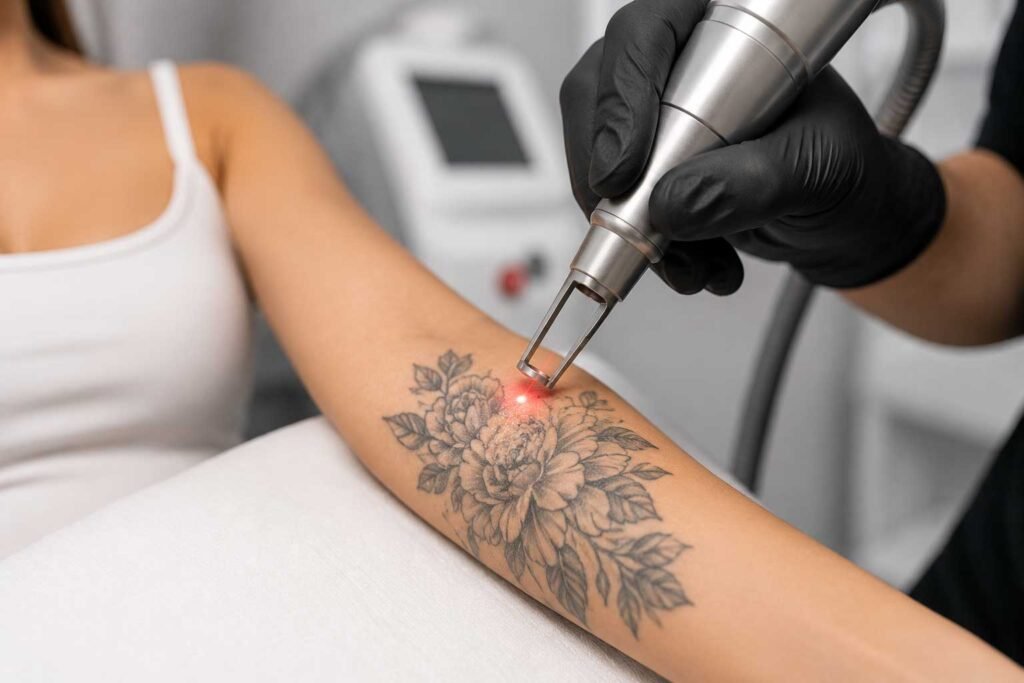
One of the most common questions people ask before starting tattoo removal is whether Pico laser treatments are less painful than traditional Q-switched laser treatments. While pain is subjective and varies from person to person, many patients report that Pico laser sessions feel slightly more comfortable because the laser delivers energy in ultra-short bursts, reducing the amount of heat transferred to the surrounding skin.
Most people describe the sensation as brief and tolerable rather than intensely painful. Since Pico lasers often work more efficiently, treatment sessions may also be shorter, which can further improve overall comfort.
How Laser Tattoo Removal Feels
| Common Description | What Patients Mean |
|---|---|
| Rubber band snapping | A quick, sharp sting against the skin |
| Tiny hot pinpricks | Short bursts of heat during each laser pulse |
| Grease splatter | Small, fast stinging sensations that last only a moment |
Several factors can influence how much discomfort you experience during treatment.
Factors That Affect Pain Levels
| Factor | Impact on Comfort |
|---|---|
| Tattoo Location | Areas with thinner skin or close to bone, such as the ribs, ankles, hands, and feet, tend to be more sensitive. |
| Tattoo Size | Larger tattoos require longer treatment sessions, which may increase overall discomfort. |
| Skin Sensitivity | Individual pain tolerance varies from person to person. |
| Ink Density | Heavily saturated tattoos may require more laser passes during treatment. |
| Session Length | Longer appointments may become less comfortable over time. |
To help improve patient comfort, many professional clinics use cooling devices, cold air systems, ice packs, or topical numbing creams before and during treatment. These methods can significantly reduce discomfort and make the procedure easier to tolerate.
Although Pico laser tattoo removal may feel slightly less painful for many patients, both Pico and traditional laser treatments are generally well tolerated, with each laser pulse lasting only a fraction of a second. Your provider can recommend the most appropriate pain management options based on your tattoo and personal comfort level.
Healing Time After Laser Tattoo Removal
Healing is another factor to evaluate when comparing Pico Laser vs Traditional Laser Tattoo Removal. Healing after laser tattoo removal varies from person to person and depends on several factors, including the type of laser used, the intensity of the treatment, your skin type, the size of the tattoo, and how closely you follow your aftercare instructions. While the treated area begins healing almost immediately, your body continues clearing fragmented ink particles for several weeks after each session.
Following proper wound care recommendations from the American Academy of Dermatology can help reduce complications and support healthy healing.
Most patients recover from the initial skin reaction within one to two weeks, although complete fading continues between treatments as the immune system gradually removes the broken-down ink.
Common Side Effects After Treatment
| Side Effect | What to Expect |
|---|---|
| Redness | Mild redness around the treated area is common and usually subsides within a few days. |
| Swelling | Temporary swelling may occur immediately after treatment and typically resolves within 24 to 72 hours. |
| Frosting | A temporary white appearance on the skin caused by trapped gas bubbles, usually disappearing within minutes. |
| Mild Blistering | Small blisters can develop as part of the normal healing process and should not be picked. |
| Temporary Itching | Itching often occurs as the skin heals and new tissue forms. |
| Skin Sensitivity | The treated area may remain tender or sensitive for several days after each session. |
Most people can return to their normal daily activities shortly after treatment, but the skin itself generally requires one to two weeks to heal before it feels completely comfortable. Your provider will also recommend waiting several weeks between sessions to allow both the skin and immune system sufficient time to recover.
Pico laser technology may promote slightly faster recovery for some patients because it relies more on powerful pressure waves than prolonged heat to break apart tattoo ink. This approach can reduce thermal damage to surrounding tissue, potentially leading to less inflammation, milder side effects, and a smoother healing process compared with some traditional Q-switched laser systems. Regardless of the laser used, following proper aftercare—including keeping the area clean, avoiding sun exposure, and resisting the urge to pick at scabs or blisters—is essential for achieving the best possible results.
Is Pico Laser Better for Cover-Up Tattoos?
In many cases, yes. Pico laser tattoo removal is often the preferred option for preparing tattoos for a cover-up because it can lighten existing ink more efficiently than many traditional laser systems. Rather than completely removing the tattoo, the goal is usually to fade the old design enough for a tattoo artist to create a cleaner, more vibrant, and more detailed piece over the existing ink.
By breaking tattoo pigment into smaller particles, Pico lasers can help accelerate the fading process, making it easier for artists to work with a lighter canvas. This often allows for greater creativity, improved color choices, and better overall results when designing the new tattoo.
Why Pico Lasers Are Popular for Tattoo Cover-Ups
| Benefit | Why It Helps |
|---|---|
| Faster Ink Fading | May lighten existing tattoos more quickly than traditional laser treatments. |
| Fewer Treatment Sessions | Some tattoos require fewer sessions before they are ready for a cover-up. |
| Better Color Reduction | Can be more effective at fading stubborn colors that might interfere with a new design. |
| Cleaner Canvas | A lighter tattoo gives artists more flexibility when creating detailed artwork. |
| Less Heat Damage | Reduced thermal impact may help preserve the skin for future tattooing. |
Not every tattoo needs to be completely removed before getting a cover-up. In many cases, just a few laser sessions are enough to fade the original design so the tattoo artist can achieve a brighter, sharper, and more natural-looking result. The exact number of treatments depends on factors such as the tattoo’s size, color, age, and ink density, as well as the design planned for the new tattoo.
If you’re considering a cover-up tattoo, consulting with both an experienced laser provider and your tattoo artist can help determine how much fading is needed before starting your new design. This collaborative approach often leads to the best cosmetic outcome.
How Many Sessions Does Tattoo Removal Take?
There is no fixed number of laser treatments required to remove a tattoo. Every tattoo is unique, and the number of sessions depends on factors such as the size, colors, ink depth, age of the tattoo, your skin type, and how efficiently your immune system clears away the fragmented ink. While some tattoos fade relatively quickly, others require a longer treatment plan to achieve the desired results.
When evaluating Pico Laser vs Traditional Laser Tattoo Removal, many patients focus on the total number of sessions required. Although every tattoo is different, Pico laser technology may reduce the overall treatment timeline for certain tattoos.
Lifestyle factors can also influence the removal process. For example, people with a healthy immune system, good circulation, and those who do not smoke often experience faster fading between sessions than those with slower healing or reduced circulation.
Factors That Affect the Number of Sessions
| Factor | How It Affects Treatment |
|---|---|
| Tattoo Size | Larger tattoos generally require more treatment sessions. |
| Ink Colors | Bright colors such as green, yellow, and white are often more difficult to remove than black ink. |
| Ink Depth | Professional tattoos typically contain deeper, denser ink than amateur tattoos. |
| Tattoo Age | Older tattoos may fade more easily because some pigment has naturally broken down over time. |
| Skin Tone | Skin type influences laser settings and treatment planning. |
| Immune System Response | A healthy immune system helps clear shattered ink particles more efficiently. |
| Smoking Status | Smoking may slow the body’s ability to remove tattoo pigment, potentially increasing the number of sessions needed. |
| Laser Technology | Advanced Pico laser systems may reduce the total number of treatments for certain tattoos. |
Estimated Number of Treatment Sessions
| Tattoo Type | Typical Number of Sessions |
|---|---|
| Small Black Tattoo | 4–8 sessions |
| Professional Colored Tattoo | 8–15 sessions |
| Layered or Cover-Up Tattoo | 10–20 sessions |
| Cosmetic Tattoo (Permanent Makeup) | Varies depending on pigment and location |
While Pico laser technology cannot eliminate the need for multiple treatments, it may reduce the overall number of sessions for some tattoos by breaking ink into smaller particles more efficiently than traditional Q-switched lasers. During your consultation, a qualified provider can evaluate your tattoo and provide a personalized estimate based on its size, colors, location, and your treatment goals.
Is Pico Laser Worth the Higher Cost?
One of the biggest questions in the Pico Laser vs Traditional Laser Tattoo Removal comparison is whether the higher cost of Pico technology is justified. Pico laser tattoo removal typically costs more per session than traditional Q-switched laser treatments because it uses newer, more advanced technology. However, the cost of a single appointment is only one part of the overall investment. When comparing treatment options, it’s important to consider the total number of sessions required, the speed of fading, and the quality of the final results.
For many patients, Pico laser technology offers better long-term value because it can remove certain tattoos more efficiently, especially those with stubborn colors or dense professional ink. While results vary from person to person, some individuals achieve their desired outcome in fewer treatments, which can help offset the higher cost per session.
Why Many Patients Choose Pico Laser
| Benefit | Potential Advantage |
|---|---|
| Fewer Treatment Sessions | Some tattoos may require fewer appointments to achieve the desired level of fading. |
| Faster Visible Results | Many patients notice quicker fading between treatments. |
| Improved Color Removal | Often more effective on difficult colors such as green, blue, and turquoise. |
| Reduced Recovery Time | Less thermal damage may lead to milder inflammation and a smoother healing process. |
| Advanced Technology | Uses ultra-short picosecond pulses to break ink into smaller particles more efficiently. |
Although Pico laser treatments generally have a higher upfront cost, they may be more cost-effective over the course of the entire removal process. If fewer sessions are needed and the tattoo fades more efficiently, the overall investment may be similar—or even lower—than undergoing additional treatments with older laser technology.
The best way to determine which option offers the greatest value is through a professional consultation. An experienced provider can evaluate your tattoo, discuss your goals, and recommend the laser technology most likely to deliver the best results for your individual situation.
Who Is a Good Candidate for Pico Laser Tattoo Removal?
Pico laser tattoo removal is an excellent option for many people looking to remove or fade unwanted tattoos. Because it uses ultra-short picosecond pulses to break ink into smaller particles, it can be particularly effective for complex tattoos, stubborn pigments, and individuals who want to achieve results as efficiently as possible. However, the best laser technology depends on your tattoo, skin type, treatment goals, and budget.
Understanding Pico Laser vs Traditional Laser Tattoo Removal can help determine which option best fits your tattoo and treatment goals.
Ideal Candidates for Pico Laser Tattoo Removal
| Candidate | Why Pico Laser May Be a Good Choice |
|---|---|
| Multi-Colored Tattoos | Advanced wavelengths can target a wider range of difficult ink colors. |
| Resistant Tattoos | May improve fading of tattoos that have responded poorly to previous treatments. |
| Cover-Up Preparation | Can lighten existing tattoos more efficiently before a new tattoo is applied. |
| Cosmetic Tattoo Removal | Often used for removing unwanted permanent makeup and cosmetic tattoos, depending on the pigment used. |
| Patients Wanting Faster Results | Some tattoos may fade more quickly, potentially reducing the overall treatment timeline. |
| Small Tattoos | Smaller designs may achieve the desired fading in fewer treatment sessions. |
Traditional Q-switched laser systems remain an excellent option for many patients and continue to produce reliable tattoo removal results.
When Traditional Q-Switched Lasers May Be a Better Fit
| Candidate | Why Traditional Lasers May Work Well |
|---|---|
| Simple Black Tattoos | Black ink responds very well to traditional laser technology. |
| Older, Naturally Faded Tattoos | Older tattoos often require less energy because some pigment has already broken down over time. |
| Budget-Conscious Patients | Lower cost per session may make traditional treatments more affordable upfront. |
| Small Amateur Tattoos | These tattoos typically contain less ink and often respond well to Q-switched lasers. |
Ultimately, the most suitable treatment depends on factors such as your tattoo’s size, colors, age, ink density, skin tone, and desired outcome. A professional consultation allows your provider to evaluate these factors and recommend the laser technology most likely to deliver safe, effective, and predictable results.
Tattoo Removal Aftercare Tips
Proper aftercare is one of the most important parts of a successful tattoo removal journey. While advanced laser technology plays a significant role in the treatment process, how you care for your skin afterward can greatly influence healing, comfort, and your final results. Following your provider’s instructions helps protect the treated area, supports your body’s natural healing process, and reduces the risk of complications between sessions.
Whether you choose Pico Laser vs Traditional Laser Tattoo Removal, following proper aftercare instructions is essential for minimizing side effects and achieving the best possible fading.
Essential Aftercare Guidelines
| Aftercare Tip | Why It’s Important |
|---|---|
| Keep the Area Clean and Dry | Helps prevent infection and promotes healthy healing. |
| Avoid Sun Exposure | Protects the treated skin from irritation and reduces the risk of pigmentation changes. |
| Do Not Pick Scabs or Blisters | Allows the skin to heal naturally and helps minimize the risk of scarring. |
| Apply Recommended Ointments | Keeps the skin moisturized and supports the healing process as directed by your provider. |
| Avoid Pools, Hot Tubs, and Saunas | Reduces the chance of infection while the skin is healing. |
| Wear Loose Clothing | Prevents unnecessary friction and irritation over the treated area. |
| Stay Hydrated | Supports your body’s natural healing and immune response, which helps clear fragmented tattoo ink. |
Following these aftercare recommendations can significantly improve your recovery and reduce the likelihood of unwanted side effects.
Benefits of Proper Aftercare
| Benefit | How It Helps |
|---|---|
| Lower Risk of Scarring | Protects healing skin and minimizes unnecessary trauma. |
| Reduced Hyperpigmentation | Helps prevent temporary or long-lasting skin discoloration. |
| Lower Risk of Infection | Keeping the area clean reduces bacterial exposure. |
| Faster Healing | Healthy skin typically recovers more comfortably between treatment sessions. |
Remember that your immune system continues removing shattered tattoo ink long after the visible skin has healed. By following your provider’s aftercare instructions and giving your skin adequate time to recover between sessions, you can maximize your results and help ensure the safest possible tattoo removal experience.
Why Professional Tattoo Removal Matters
Choosing a qualified provider is one of the most important decisions you’ll make during your tattoo removal journey. While DIY methods and unregulated treatments may promise quick or inexpensive results, professional laser tattoo removal offers a much higher level of safety, precision, and effectiveness. Every tattoo is unique, and factors such as ink colors, depth, skin type, and medical history all influence the treatment approach.
Choosing between Pico Laser vs Traditional Laser Tattoo Removal is only part of the decision. Selecting an experienced provider is equally important for achieving safe, predictable, and effective results.
Experienced laser professionals understand how to customize treatments to achieve the best possible results while minimizing unnecessary risks. Using medical-grade equipment and proven treatment protocols also helps protect the surrounding skin throughout the removal process.
Benefits of Professional Tattoo Removal
| Professional Advantage | Why It Matters |
|---|---|
| Comprehensive Tattoo Assessment | Evaluates tattoo size, colors, age, ink density, and skin type before treatment begins. |
| Safe Laser Settings | Adjusts laser wavelengths and energy levels to maximize effectiveness while protecting the skin. |
| Lower Risk of Skin Damage | Proper technique helps reduce the chances of burns, scarring, and unwanted pigmentation changes. |
| Medical Screening | Identifies contraindications, medications, or skin conditions that may affect treatment safety. |
| Personalized Treatment Plan | Creates a schedule based on your tattoo, goals, healing response, and expected number of sessions. |
Professional clinics equipped with advanced laser technology are often better prepared to treat challenging tattoos, including multi-colored designs, cover-up tattoos, cosmetic tattoos, and tattoos on sensitive areas of the body. They can also adjust treatment protocols for different skin tones and monitor your progress throughout the removal process.
By choosing an experienced provider, you benefit from expert guidance, safer treatments, realistic expectations, and a personalized plan designed to achieve the best possible results with the lowest risk of complications.
Tattoo Removal Consultations in Madison, Wisconsin
If you’re considering laser tattoo removal near Madison, Wisconsin, scheduling a professional tattoo removal consultation is the best first step toward achieving safe and effective results. Every tattoo is unique, and factors such as its size, colors, age, ink density, location, and your skin type all influence the treatment plan and the number of sessions you may need.
At Total Body Laser Med Spa in Middleton, just minutes from Madison, each consultation includes a personalized evaluation to determine the most appropriate laser technology for your tattoo. Your provider will assess your tattoo, discuss your goals, explain what results you can realistically expect, and answer any questions about the procedure, healing process, and aftercare.
Whether you’re looking to completely remove an unwanted tattoo or simply fade it for a future cover-up, a customized treatment plan can help you achieve the best possible outcome. With advanced laser technology and experienced providers, Total Body Laser Med Spa offers professional tattoo removal treatments designed to maximize fading while prioritizing the health and appearance of your skin.
Ready to begin your tattoo removal journey? Schedule a consultation today to receive a personalized assessment and learn which treatment option is right for you.
Which Tattoo Removal Option Is Right for You?
Choosing between Pico Laser vs Traditional Laser Tattoo Removal ultimately depends on your tattoo, skin type, budget, and desired results. Both technologies have proven to be effective, but Pico laser systems often provide advantages for multi-colored, stubborn, and densely inked tattoos by producing faster fading and, in some cases, reducing the total number of treatment sessions.
Traditional Q-switched lasers continue to be an excellent choice for many black, dark-colored, and older tattoos, particularly for patients seeking a more budget-friendly treatment option. An experienced provider can help determine which laser technology is most likely to deliver the safest and most effective results based on your tattoo’s colors, size, age, location, and your skin type.
If you’re considering laser tattoo removal in the Madison, Wisconsin area, scheduling a consultation with Total Body Laser Med Spa is the best way to receive a personalized assessment and realistic treatment plan. During your consultation, you’ll learn what results to expect, how many sessions your tattoo may require, and whether Pico laser or traditional laser technology is the right choice for your needs.
No matter which laser system is recommended, working with an experienced provider and following proper aftercare instructions will help you achieve the best possible outcome on your tattoo removal journey.
Frequently Asked Questions
Which is better: Pico Laser vs Traditional Laser Tattoo Removal?
When comparing Pico Laser vs Traditional Laser Tattoo Removal, Pico systems often provide faster fading, better removal of difficult colors, and may require fewer sessions. Traditional Q-switched lasers remain an excellent choice for many black and older tattoos, especially for patients seeking a lower-cost option.
How many tattoo removal sessions will I need?
The number of sessions depends on several factors, including the tattoo’s size, colors, age, ink density, location, and your body’s immune response. Small black tattoos may require as few as four to eight treatments, while large, colorful, or layered tattoos can require ten or more sessions.
Does Pico laser tattoo removal hurt?
Most patients describe Pico laser tattoo removal as feeling like a rubber band snapping against the skin or tiny hot pinpricks. While discomfort varies by individual, many people find Pico laser treatments slightly more comfortable than traditional laser treatments because they generate less heat.
Which tattoo colors are the hardest to remove?
Black ink is generally the easiest to remove because it absorbs laser energy efficiently. Colors such as green, teal, yellow, white, fluorescent pigments, and pastel shades are typically more difficult and often require additional treatment sessions or advanced laser technology.
Can Pico laser remove colored tattoos?
Yes. Pico laser technology is particularly effective for many colored tattoos, including difficult pigments like green and blue. While no laser can guarantee complete removal of every color, Pico lasers often achieve better results on multi-colored tattoos than traditional Q-switched lasers.
How long does it take for the skin to heal after each laser session?
Most people experience redness, swelling, and mild sensitivity for several days following treatment, with the skin typically healing within one to two weeks. Complete fading continues over the following weeks as the body gradually removes the fragmented ink particles.
Can I get a cover-up tattoo after laser removal?
Yes. Many people choose laser tattoo fading instead of complete removal before getting a cover-up tattoo. Lightening the existing tattoo allows the tattoo artist to create a cleaner, brighter, and more detailed new design with greater flexibility.
Is laser tattoo removal safe?
When performed by an experienced provider using professional laser equipment, laser tattoo removal is generally considered safe for most healthy adults. Temporary side effects such as redness, swelling, blistering, and itching are common, while serious complications are uncommon when proper aftercare instructions are followed.
Is Pico laser tattoo removal worth the extra cost?
Although Pico laser treatments usually cost more per session, they may reduce the overall number of treatments needed for certain tattoos. Many patients find the faster fading, improved color removal, and shorter treatment timeline make Pico laser technology a worthwhile long-term investment.
How do I know which laser is right for my tattoo?
The best laser depends on your tattoo’s size, colors, age, ink depth, location, skin type, and treatment goals. A professional consultation allows your provider to evaluate these factors and recommend whether Pico laser or traditional Q-switched laser technology is the better option for achieving your desired results.
Is there a clear winner in Pico Laser vs Traditional Laser Tattoo Removal?
The answer depends on your tattoo, skin type, and treatment goals. In the Pico Laser vs Traditional Laser Tattoo Removal comparison, Pico technology often offers faster fading and improved performance on stubborn colors, while traditional Q-switched lasers remain highly effective for many black and older tattoos.
We hope this Pico Laser vs Traditional Laser Tattoo Removal guide has helped you better understand your treatment options and what to expect before beginning your tattoo removal journey.