
 totaladmin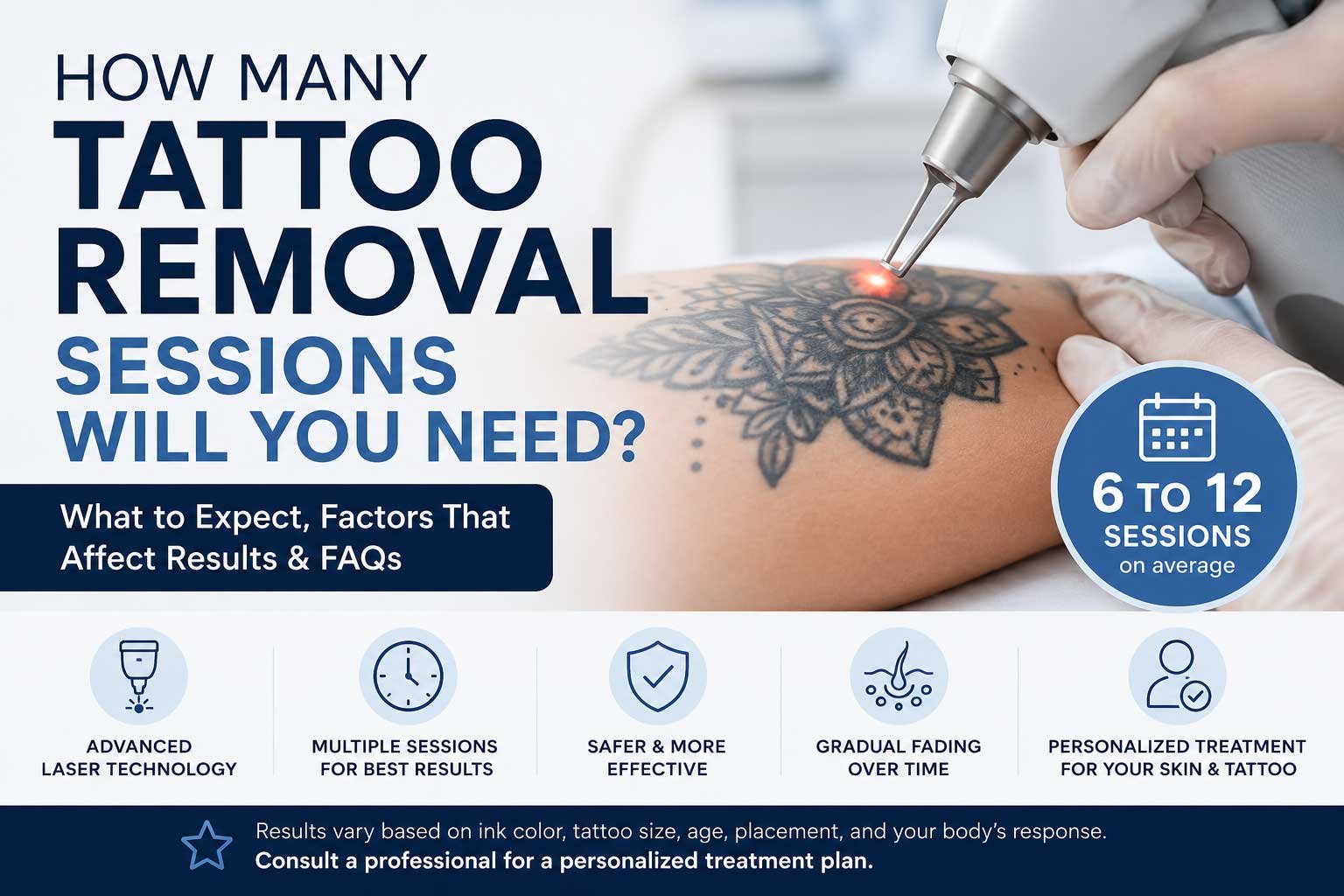
Removing a tattoo is a gradual process, not a one-time procedure. One of the most common questions people ask before beginning treatment is, “How many sessions does tattoo removal take?” While the answer varies from person to person, understanding the factors that influence the process can help set realistic expectations.
Every tattoo responds differently to laser treatment, which is why treatment plans vary from person to person. Some tattoos show significant fading after just a few sessions, while others may require 10 or more treatments depending on the tattoo’s size, ink colors, age, location on the body, and your individual skin type.
At Total Body Laser Med Spa, clients often notice visible fading after their first few laser tattoo removal sessions. However, complete removal typically requires multiple treatments spaced several weeks apart, giving your skin time to heal while allowing your body’s natural immune system to gradually clear away the fragmented ink.
If you’re considering laser tattoo removal in Madison, learn more about our treatment options and schedule a personalized consultation.
Average Number of Tattoo Removal Sessions
The number of laser tattoo removal sessions needed varies from person to person, but most tattoos fall within a general treatment range. Factors such as the tattoo’s size, ink color, age, depth, and your body’s healing response all play a role in determining how many appointments you’ll need.
| Tattoo Type | Average Sessions |
|---|---|
| Small black tattoo | 4–8 sessions |
| Medium professional tattoo | 6–10 sessions |
| Large colored tattoo | 8–12+ sessions |
| Amateur tattoo | 3–6 sessions |
| Cover-up tattoo | 10–15+ sessions |
These treatment ranges are estimates, not guarantees. Some tattoos fade faster than expected, while others contain dense or stubborn ink that requires additional treatments. A professional consultation is the best way to estimate how many sessions your specific tattoo may need based on its unique characteristics.
Why Tattoo Removal Takes Multiple Sessions
Laser tattoo removal is designed to gradually break down tattoo ink so your body’s natural immune system can safely eliminate it over time. Because only a portion of the ink can be treated during each appointment, multiple sessions are necessary to achieve the best possible results while protecting your skin.
During each laser tattoo removal treatment:
- The laser targets tattoo pigment beneath the skin.
- The ink absorbs the laser energy and breaks into tiny fragments.
- Your immune system gradually removes these fragmented ink particles over the following weeks.
- The tattoo becomes lighter with each treatment as more ink is cleared away.
For this reason, treatments are typically scheduled every 6 to 8 weeks. This healing period allows your skin to recover fully and gives your body enough time to remove as much of the broken-down ink as possible before the next session.
While it may be tempting to schedule treatments closer together, doing so usually won’t speed up the removal process. In fact, rushing appointments can increase skin irritation, interfere with proper healing, and may reduce the effectiveness of each treatment. Patience and consistency are key to achieving the safest and most successful tattoo removal results.
If you’re wondering what to expect after each treatment, read our Laser Tattoo Removal Aftercare Guide to learn how proper aftercare can support healing and help you achieve the best possible results.
Factors That Affect How Many Tattoo Removal Sessions You Need
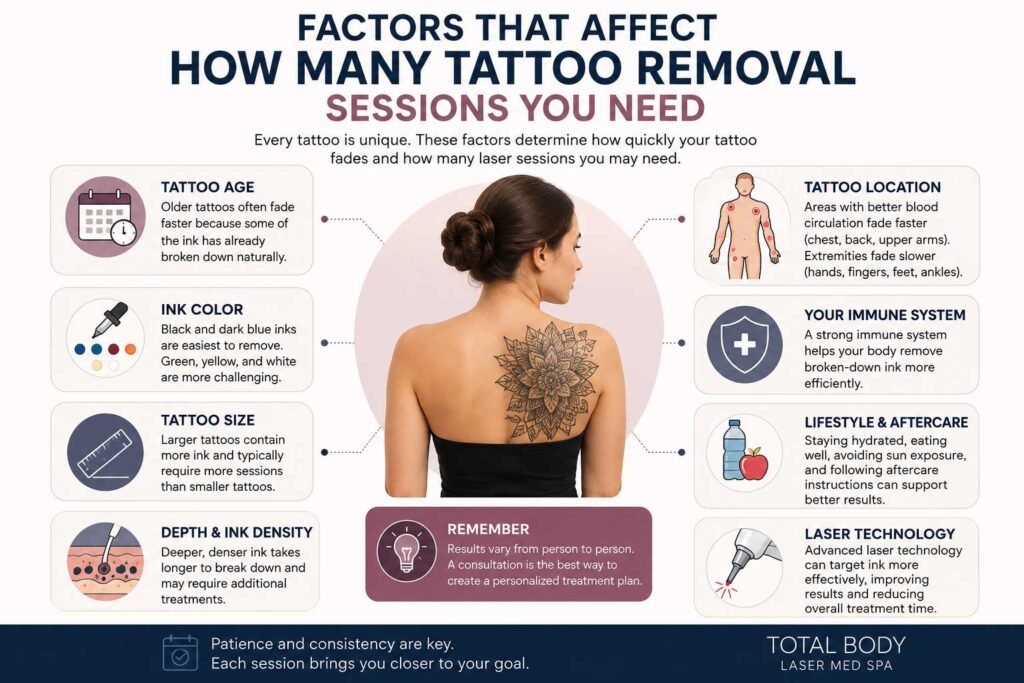
Because every tattoo is unique, no two treatment plans are exactly alike. Several factors influence how quickly a tattoo fades and how many laser tattoo removal sessions you’ll need to achieve your desired results.
Tattoo Age
Older tattoos often respond more quickly to laser treatment because the body has naturally broken down some of the ink over the years. As a result, there may be less pigment remaining for the laser to target.
Newer tattoos typically contain denser, more vibrant ink that hasn’t had time to fade naturally, so they often require additional treatment sessions.
Ink Color
The color of your tattoo has a significant impact on how well it responds to laser tattoo removal. Different pigments absorb laser energy differently, making some colors easier to remove than others.
Generally:
- Black ink – easiest to remove
- Dark blue ink – usually responds very well
- Green ink – more challenging and may require additional sessions
- Yellow and white ink – among the most difficult colors to remove
Multi-colored tattoos often require additional treatments because each pigment reacts differently to laser energy.
Tattoo Size
Larger tattoos naturally contain more ink, which means they usually require more laser sessions than smaller designs.
For example, a small finger tattoo may fade within a handful of treatments, while a full sleeve, chest piece, or back tattoo can require a much longer treatment plan.
Tattoo Depth and Ink Density
Professional tattoos are generally placed deeper into the skin using higher-quality inks and greater pigment saturation. Because there is more ink to break apart, these tattoos often require additional treatments.
Amateur tattoos are typically applied more superficially with less consistent ink density, allowing many of them to fade more quickly.
Tattoo Location
Where your tattoo is located also affects how quickly it fades. Areas with better blood circulation allow the immune system to remove fragmented ink particles more efficiently after each treatment.
Areas that often fade more quickly include:
- Chest
- Upper back
- Upper arms
Areas that commonly require more sessions include:
- Hands
- Fingers
- Feet
- Ankles
These areas generally have reduced circulation, which can slow the body’s ability to clear away broken-down ink.
Your Immune System
Your immune system plays one of the biggest roles in the tattoo removal process. While the laser breaks apart the ink, your body is responsible for carrying those tiny ink particles away over time.
Healthy lifestyle habits can help your body clear fragmented ink more efficiently, which may improve fading between treatments.
- Staying well hydrated
- Exercising regularly
- Avoiding smoking or tobacco products
- Eating a balanced diet
- Following your provider’s aftercare instructions
Although everyone heals differently, maintaining good overall health can help your body process fragmented ink more efficiently throughout your tattoo removal journey.
Wondering how different ink colors respond to treatment? Learn more in our guide on can colored tattoos be removed.
How Long Does the Entire Tattoo Removal Process Take?
Laser tattoo removal is a gradual process that requires patience. For most people, the complete treatment journey takes between 6 months and 2 years, depending on the tattoo and how the body responds to each session.
The overall timeline is influenced by several factors, including:
- The total number of treatment sessions needed
- The recommended healing time between appointments
- The size, color, and complexity of the tattoo
- Your skin type and immune system’s ability to clear fragmented ink
For example:
- 6 sessions scheduled about 8 weeks apart typically take around 1 year to complete.
- 10 sessions spaced 8 weeks apart usually require approximately 18 months from the first treatment to the final session.
Although the process may seem lengthy, allowing enough time between treatments is an important part of successful laser tattoo removal. Your skin needs time to heal after each appointment, and your immune system continues removing broken-down ink particles for several weeks afterward. Rushing treatments generally doesn’t produce faster results and may increase the risk of skin irritation or other complications.
Although the process takes time, staying consistent with your appointments and aftercare gives your skin the best chance to heal properly and achieve the best possible results.
Understanding the recovery process can help set realistic expectations. Read more about tattoo removal healing time before your next appointment.
Does Every Tattoo Fully Disappear?
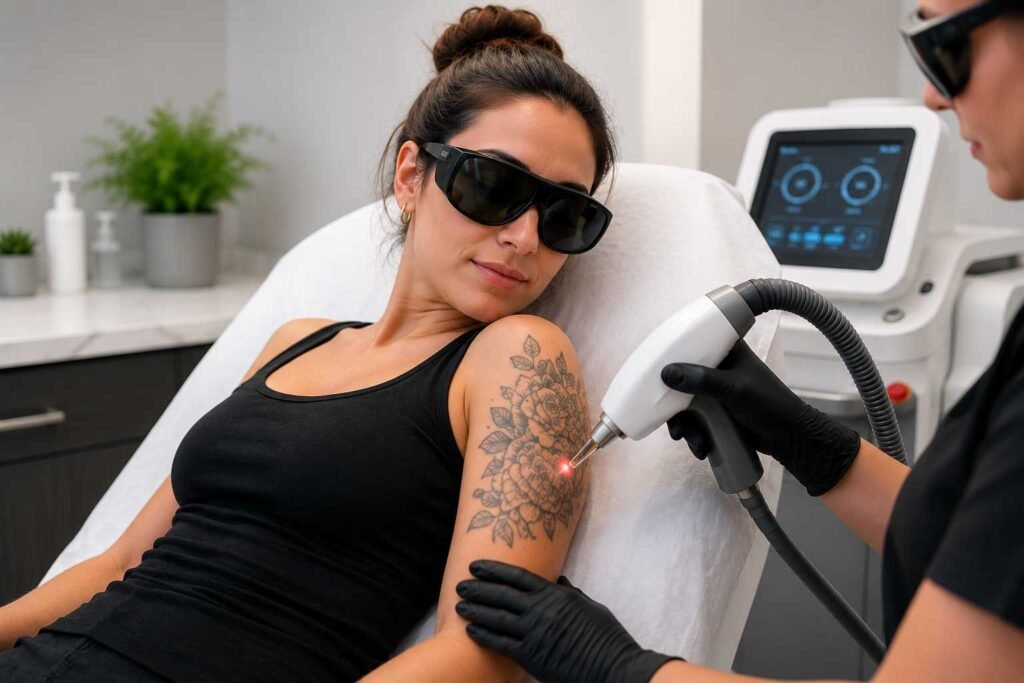
Modern laser technology can remove most tattoos almost completely. However, no clinic can guarantee that every tattoo will disappear without leaving any trace.
In some cases, a treated tattoo may leave behind:
- Slight shadowing or a faint “ghost” image
- Mild changes in skin pigmentation
- Small amounts of residual ink that are difficult to remove completely
The final outcome depends on several important factors, including:
- The type and composition of the tattoo ink
- The colors used in the tattoo
- Your skin tone and skin’s healing response
- The age and depth of the tattoo
- How consistently you complete your recommended treatment plan
Many people achieve significant fading that makes the tattoo barely noticeable or completely suitable for a cover-up. During your consultation, a qualified provider can evaluate your tattoo and discuss realistic expectations based on its size, colors, location, and your individual skin type, helping you understand the results that are most likely to be achieved.
Signs Your Tattoo Is Responding Well
No two tattoos fade at exactly the same rate, but there are several encouraging signs that your laser tattoo removal treatments are working as expected. Because the process is gradual, improvements often become more noticeable after each session as your body continues clearing away fragmented ink.
Positive signs of successful tattoo removal include:
- Gradual fading of the tattoo after each treatment
- Patchy lightening as different areas respond to the laser
- Softer, less defined tattoo edges
- Reduced ink density and a lighter overall appearance
It’s completely normal for some sections of a tattoo to fade faster than others. Tattoos with layered ink, multiple colors, or uneven pigment saturation often lighten unevenly before becoming more uniform over time. Uneven fading is completely normal and doesn’t mean the treatment isn’t working. It simply reflects how different inks and depths respond to laser energy.
Keeping up with your recommended treatment schedule and following proper aftercare instructions can help support consistent fading and the best possible long-term results.
What Happens If You Stop Halfway?
Complete tattoo removal isn’t everyone’s goal. Many people intentionally stop treatment after achieving enough fading to meet their goals, especially if they plan to cover the tattoo with new artwork.
Partial tattoo fading is a popular option for:
- Cover-up tattoos
- Tattoo redesigns
- Correcting older or poorly executed tattoos
- Lightening unwanted ink before adding a new design
Even a few laser tattoo removal sessions can significantly reduce the darkness and visibility of existing ink. This often gives tattoo artists a much cleaner canvas, allowing them to create brighter colors, sharper details, and more creative cover-up designs without the old tattoo showing through.
If you’re considering a cover-up rather than complete removal, your laser tattoo removal provider and tattoo artist can work together to determine how much fading is needed before beginning your new tattoo. This personalized approach often produces the best cosmetic results while reducing the total number of treatments required.
See how laser treatments can dramatically lighten unwanted ink by viewing our tattoo removal before and after guide.
Tips to Improve Tattoo Removal Results
While your laser treatments play the biggest role in removing unwanted ink, the way you care for your skin between appointments can also influence your overall results. Following your provider’s recommendations helps support proper healing and gives your body the best opportunity to clear fragmented ink efficiently.
Follow Proper Aftercare
Caring for the treated area after each session is essential for minimizing irritation and supporting healthy skin recovery.
To promote optimal healing:
- Keep the treatment area clean and dry.
- Avoid picking, scratching, or rubbing any scabs or blisters.
- Protect the area from excessive sun exposure.
- Apply recommended ointments or dressings as instructed.
- Follow all aftercare instructions provided by your laser specialist.
Proper aftercare not only helps reduce the risk of complications but also prepares your skin for future treatment sessions.
Stay Consistent With Appointments
Laser tattoo removal works best when treatments are performed according to your recommended schedule. While it’s important to allow enough time for healing between sessions, waiting several months longer than recommended can unnecessarily extend the overall treatment timeline.
Attending appointments consistently helps maintain steady progress and allows your provider to monitor your tattoo’s response throughout the removal process.
Avoid Tanning Before Treatments
Sun exposure before or after laser tattoo removal can make your skin more sensitive and may affect how safely your provider can perform the treatment.
To help achieve the best results:
- Avoid tanning and prolonged sun exposure before appointments.
- Wear protective clothing when possible.
- Apply a broad-spectrum sunscreen once the treated area has fully healed if it will be exposed to sunlight.
Protecting your skin from ultraviolet (UV) exposure helps reduce the risk of pigmentation changes and allows your provider to use the most effective laser settings safely throughout your treatment plan.
Is Laser Tattoo Removal Worth It?
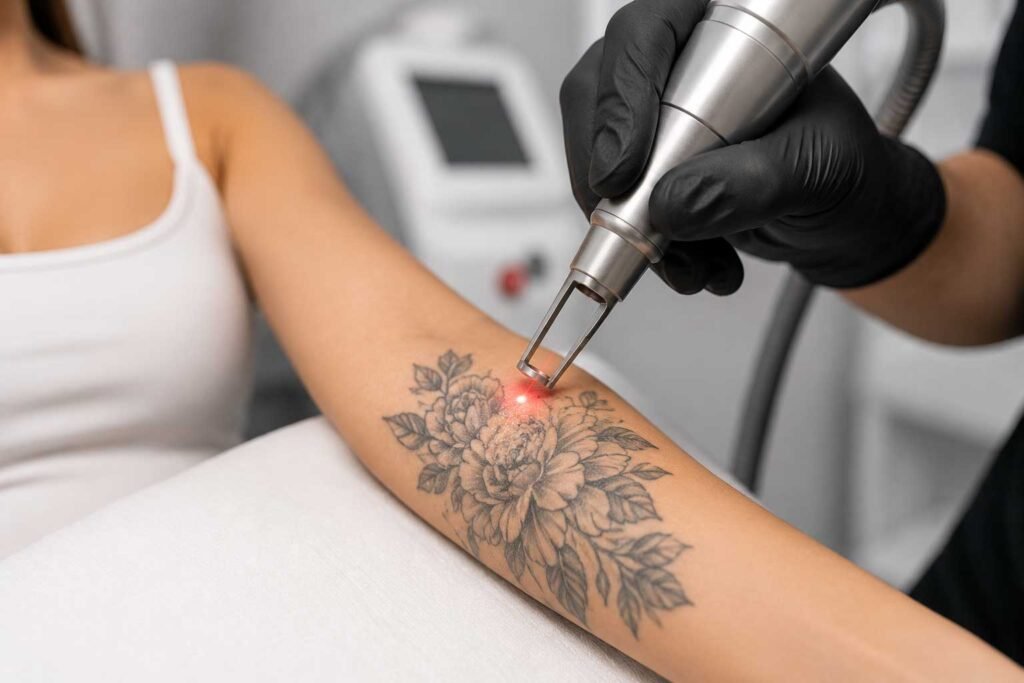
For many people, laser tattoo removal is a worthwhile investment. Whether you’re looking to erase an unwanted tattoo completely or simply lighten it for a future cover-up, modern laser technology offers a safe and effective solution with predictable, gradual results.
Laser tattoo removal offers several benefits, including the ability to:
- Remove unwanted tattoos that no longer reflect your style or preferences
- Fade existing tattoos to create a better foundation for a cover-up
- Correct older, faded, or poorly executed tattoo work
- Boost confidence by helping you feel more comfortable in your skin
Today’s advanced laser systems are significantly more precise and effective than older tattoo removal methods. They are designed to target tattoo ink while minimizing damage to the surrounding skin, resulting in better cosmetic outcomes and shorter recovery times for many patients.
Although the process requires patience and multiple treatment sessions, many people find the long-term results well worth the commitment. A professional consultation can help you understand what to expect based on your tattoo’s size, colors, location, and your personal goals, allowing you to make an informed decision before starting treatment.
If you’re still deciding whether treatment is right for you, our guide explaining does laser tattoo removal hurt answers one of the most common questions patients ask.
Frequently Asked Questions
How soon will I see tattoo fading?
Some people notice slight fading after their first laser tattoo removal session, especially with older black tattoos. However, more noticeable results usually appear after several treatments as your immune system gradually clears away fragmented ink particles.
Can a tattoo be removed in one session?
No. Safe and effective laser tattoo removal requires multiple treatment sessions. Because only a portion of the ink can be broken down during each appointment, several visits are necessary to achieve significant fading or complete removal.
Do black tattoos remove faster than colored tattoos?
Yes. Black ink generally responds the best to laser treatment because it absorbs laser energy more effectively than other colors. Colored tattoos, particularly those containing green, yellow, or white ink, often require additional sessions.
Why are tattoo removal sessions spaced several weeks apart?
Treatments are typically scheduled every 6 to 8 weeks to allow your skin to heal properly and give your immune system enough time to remove the fragmented ink. Waiting between sessions helps maximize results while reducing the risk of skin irritation.
Can colored tattoos be completely removed?
Many colored tattoos can be removed successfully using modern laser technology, but certain pigments are more resistant than others. Depending on the ink colors used, additional treatments may be needed to achieve the desired level of fading.
Does older tattoo ink fade faster?
In many cases, yes. Older tattoos often respond more quickly because some of the ink has naturally broken down over time. However, the total number of sessions still depends on factors such as ink density, tattoo size, color, location, and your body’s healing response.
Conclusion: How Many Tattoo Removal Sessions Will You Need?
So, how many sessions does tattoo removal take? For most people, the answer is between 6 and 12 laser tattoo removal sessions. However, every tattoo is unique, and the exact number of treatments depends on factors such as the tattoo’s size, colors, age, ink density, location on the body, and your individual healing response.
The key to achieving the best results is having realistic expectations, following your recommended treatment schedule, and choosing an experienced provider who uses advanced laser technology. Although laser tattoo removal requires patience, each treatment brings you closer to your goal—whether that’s complete removal or preparing your tattoo for a beautiful cover-up.
If you’re considering laser tattoo removal in Wisconsin, Total Body Laser Med Spa offers personalized consultations and customized treatment plans tailored to your tattoo, skin type, and desired outcome. An experienced provider can evaluate your tattoo, explain what to expect, and recommend the treatment approach that’s right for you.
Related Articles
Continue learning about laser tattoo removal with these helpful guides:
- Laser Tattoo Removal Aftercare Guide
- Does Laser Tattoo Removal Hurt?
- Can Colored Tattoos Be Removed?
- How Long Does Tattoo Removal Healing Take?
- Tattoo Removal Before and After: What to Expect
These articles can help you better understand the tattoo removal process, prepare for your treatments, and achieve the best possible results.