
 totaladmin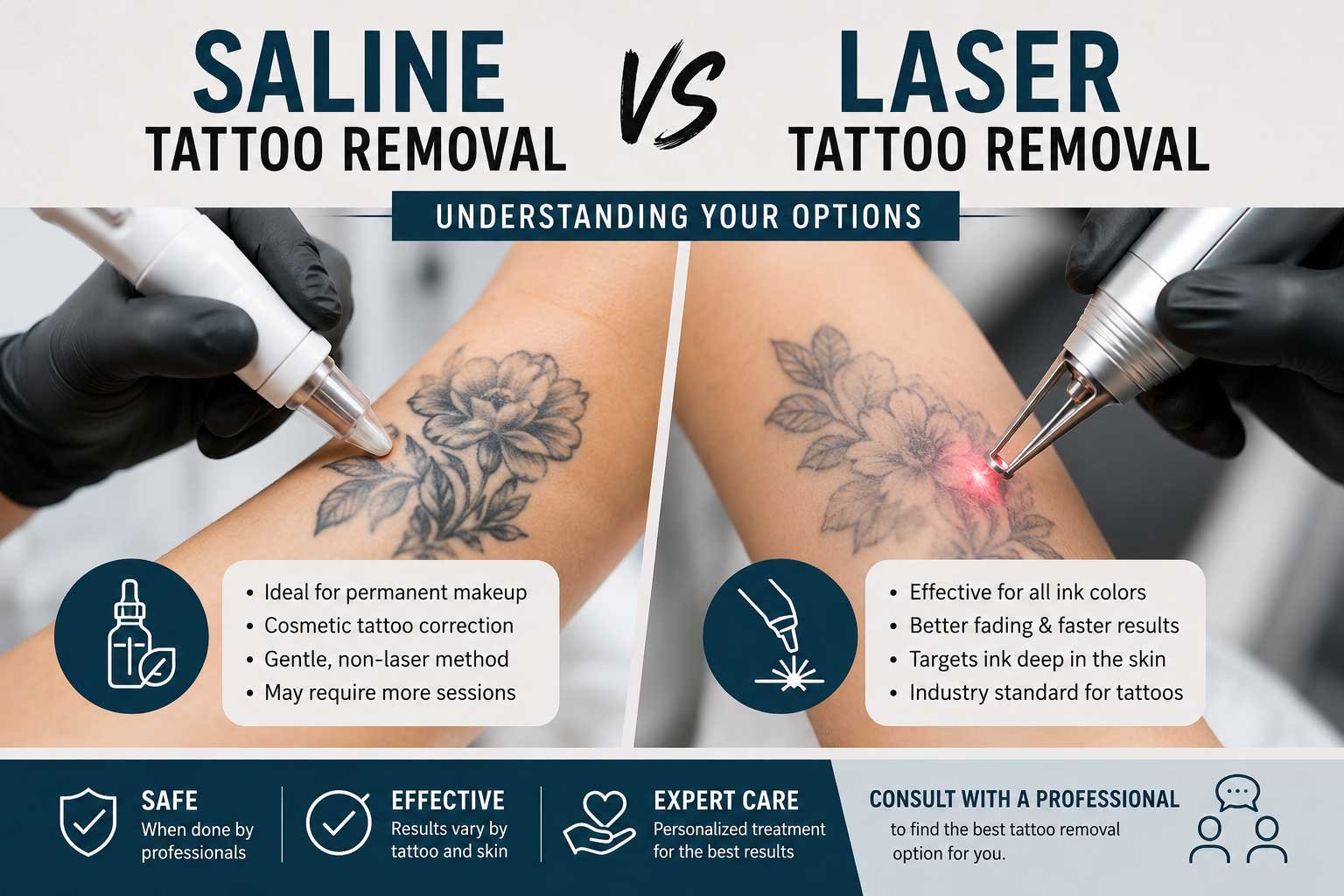
Tattoo regret is more common than many people realize. Whether you have an old tattoo that no longer reflects your personality, a faded design from years ago, or ink you want lightened for a future cover-up, choosing between saline tattoo removal vs laser tattoo removal is one of the most important decisions you’ll make. Two of the most widely discussed options today are saline tattoo removal and laser tattoo removal.
Although both treatments aim to reduce or remove unwanted tattoo ink, they work using completely different techniques and produce different results. Factors such as tattoo size, ink color, skin tone, tattoo age, healing time, and overall treatment goals all play a role in determining which method may be the better choice. Understanding the differences between saline tattoo removal vs laser tattoo removal can help you make a more informed decision before beginning treatment.
At Total Body Laser Med Spa in Madison, Wisconsin, clients frequently ask whether saline tattoo removal is a better alternative to laser tattoo removal. While saline treatments may be appropriate for certain cosmetic tattoos and permanent makeup, laser tattoo removal remains the gold standard for removing most traditional tattoos because of its effectiveness, precision, and predictable results.
This guide explains how each treatment works, compares their effectiveness, healing times, pain levels, costs, risks, and ideal candidates, and discusses which option may be best depending on your tattoo and long-term goals. By the end, you’ll have a clear understanding of the advantages and limitations of both methods so you can confidently choose the tattoo removal approach that’s right for you.
What Is Saline Tattoo Removal?
Saline tattoo removal is a non-laser tattoo removal technique that uses a specially formulated saline solution to help lift tattoo pigment from the skin. During the procedure, a trained technician uses a tattoo machine or cosmetic tattoo device to implant the saline solution into the tattooed area. This creates a controlled wound that encourages the body to draw some of the pigment toward the skin’s surface as it heals.
Unlike laser tattoo removal, which shatters ink particles beneath the skin using concentrated light energy, saline tattoo removal relies on the body’s natural healing process to gradually remove pigment. As the treated area forms a scab and eventually sheds, a portion of the tattoo ink may come away with it. Because only a limited amount of pigment is typically removed during each session, multiple treatments are usually necessary to achieve noticeable fading.
Saline tattoo removal is most commonly recommended for permanent makeup and cosmetic tattoo correction rather than large decorative tattoos. It may be used to remove or lighten microblading, powder brows, lip blush, eyeliner tattoos, and other cosmetic pigments. In some cases, it may also be considered for very small traditional tattoos or situations where laser treatment is not the preferred option.
Understanding saline tattoo removal vs laser tattoo removal is important because each treatment works differently and is best suited for different types of tattoos.
How Saline Tattoo Removal Works
The treatment begins with cleaning and preparing the skin, followed by the application of a topical numbing cream if needed. A tattoo machine is then used to implant the saline solution into the tattooed skin in a manner similar to the original tattooing process. The saline creates controlled irritation, triggering the body’s healing response and encouraging pigment to migrate toward the surface.
After the procedure, the area develops a protective scab that should be allowed to heal naturally. As the scab falls away over the following days or weeks, some tattoo pigment is removed with it. Because only a portion of the ink is lifted during each treatment, additional sessions are generally required until the desired amount of fading has been achieved.
Healing typically takes between one and three weeks for each session, depending on the size of the treated area, your skin type, and how well aftercare instructions are followed. Proper wound care is essential to minimize the risk of infection, scarring, and unwanted pigment changes while promoting the best possible results.
What Is Laser Tattoo Removal?
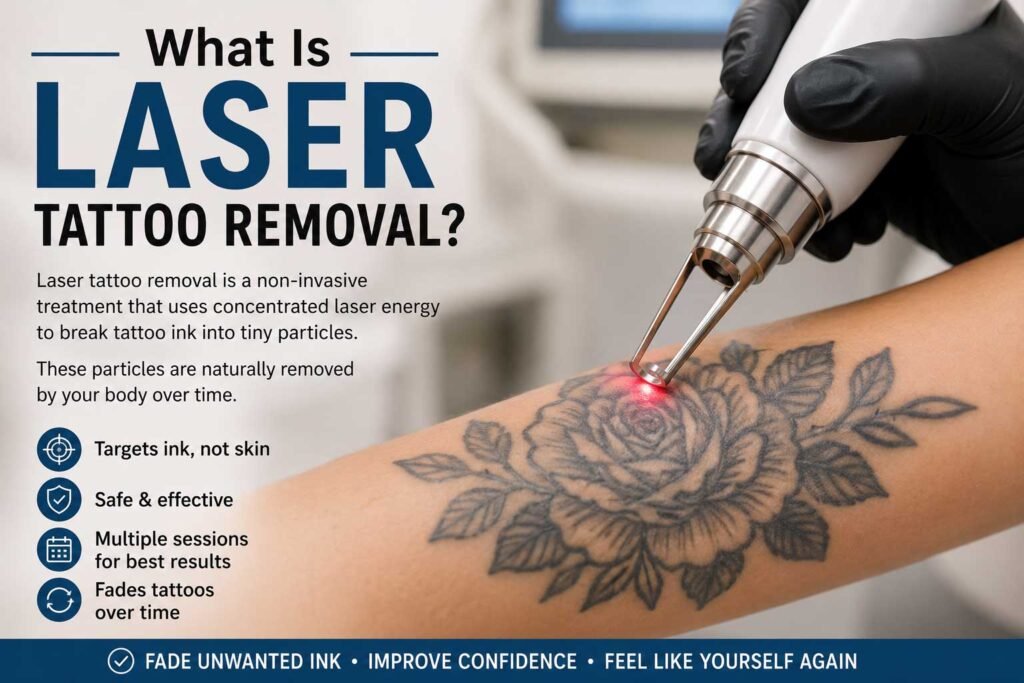
Laser tattoo removal is the most advanced and widely used method for removing unwanted tattoos. The treatment works by delivering concentrated pulses of laser energy into the skin, where the light is absorbed by the tattoo pigment. This energy breaks the ink into microscopic particles that can then be gradually eliminated by the body’s lymphatic and immune systems over the following weeks and months.
Because the laser specifically targets tattoo pigment while minimizing damage to the surrounding skin, laser tattoo removal is considered the gold standard for removing both amateur and professional tattoos. Modern technologies, including Pico lasers and Q-switched lasers, are capable of treating a wide variety of tattoo colors and skin types while offering improved precision, faster fading, and a lower risk of scarring when performed by an experienced provider.
Laser tattoo removal is commonly recommended for black tattoos, colorful designs, large professional tattoos, multi-colored artwork, and tattoos that need to be lightened before a cover-up. While complete removal often requires multiple treatments, many clients begin noticing visible fading after just a few sessions.
At Total Body Laser Med Spa in Madison, Wisconsin, every laser tattoo removal treatment is customized based on factors such as tattoo size, ink color, pigment depth, tattoo age, skin tone, and your desired outcome. This personalized approach helps maximize results while reducing the risk of unwanted side effects.
How Laser Tattoo Removal Works
Before treatment begins, your provider evaluates the tattoo to determine the most appropriate laser settings based on the ink colors, skin type, and location of the tattoo. Protective eyewear is worn throughout the procedure to shield the eyes from the laser light.
During treatment, the laser delivers rapid pulses of energy that pass harmlessly through the outer layers of skin before targeting the tattoo pigment beneath the surface. The ink absorbs the laser energy and fractures into tiny particles without physically removing the skin. Over the following weeks, the body’s immune system gradually clears these fragmented ink particles through its natural healing processes.
Because only a portion of the pigment is broken down during each session, treatments are typically spaced six to eight weeks apart to allow adequate healing and maximize ink clearance. The total number of sessions varies depending on factors such as tattoo size, ink density, colors used, the age of the tattoo, and individual healing response. While smaller or older tattoos may fade more quickly, larger professional tattoos often require additional sessions to achieve optimal results.
This is one of the biggest reasons why saline tattoo removal vs laser tattoo removal is such a common comparison among people considering tattoo removal.
Saline Tattoo Removal vs Laser Tattoo Removal: Main Differences
Although both saline tattoo removal and laser tattoo removal are designed to fade or remove unwanted tattoos, they use completely different techniques and often produce different results. Saline tattoo removal relies on the body’s natural healing process to lift pigment through the skin, while laser tattoo removal breaks ink into microscopic particles that are gradually eliminated by the immune system. Understanding these differences can help you choose the treatment that best fits your tattoo, skin type, and cosmetic goals.
| Feature | Saline Tattoo Removal | Laser Tattoo Removal |
|---|---|---|
| Technology | Uses a sterile saline solution implanted into the skin | Uses concentrated laser energy to target tattoo pigment |
| Best For | Permanent makeup, microblading, cosmetic tattoos, and small corrections | Most traditional tattoos, including professional and large designs |
| How Ink Is Removed | Draws pigment toward the skin’s surface during healing | Breaks ink into tiny particles that are naturally cleared by the immune system |
| Number of Sessions | Often requires numerous treatments | Typically requires fewer sessions for comparable fading |
| Pain Level | Moderate burning or scratching sensation | Short, intense snapping sensation similar to a rubber band |
| Healing Time | One to three weeks with visible scabbing and peeling | Usually several days of redness and swelling with less visible downtime |
| Risk of Scarring | Higher if aftercare is poor or healing is interrupted | Generally lower when performed by an experienced provider using proper settings |
| Effectiveness on Black Ink | Limited, especially for deeply implanted ink | Excellent results on most black tattoos |
| Effectiveness on Colored Tattoos | Less effective for vibrant or multiple colors | Highly effective when appropriate laser wavelengths are used |
| Downtime | More noticeable healing with crusting and scabbing | Mild redness, swelling, occasional blistering, and relatively quick recovery |
For most traditional tattoos, laser tattoo removal offers faster fading, greater versatility, and more predictable long-term results. Saline tattoo removal continues to be a valuable option for correcting permanent makeup and certain cosmetic tattoos, but it is generally less effective for removing larger decorative tattoos with dense or colorful ink. A professional consultation can help determine which approach is the safest and most effective for your individual tattoo and skin type.
Which Tattoo Removal Method Is More Effective?
When comparing saline tattoo removal vs laser tattoo removal, laser tattoo removal is considered the most effective treatment for most traditional tattoos. Thanks to advances in laser technology, modern systems can target a wide range of tattoo colors while minimizing damage to the surrounding skin. This allows for more consistent fading, improved cosmetic outcomes, and a greater likelihood of achieving significant or complete tattoo removal.
Laser tattoo removal works by delivering concentrated pulses of light energy that penetrate the skin and shatter tattoo ink into microscopic particles. These particles are then gradually removed by the body’s immune system over the following weeks. Because the laser targets the pigment rather than physically removing the skin, it can effectively treat tattoos of varying sizes, colors, and depths with a lower risk of permanent scarring when performed by an experienced provider.
Saline tattoo removal can still be an effective option in certain situations, particularly for cosmetic tattoos and permanent makeup. It is commonly used to lighten or remove eyebrow tattoos, lip blush, eyeliner tattoos, and small areas requiring correction. For these specialized applications, saline treatments may provide satisfactory results, especially when laser treatment is not recommended.
However, saline tattoo removal is generally less effective for larger decorative tattoos because it often struggles to remove deeply implanted pigment and dense professional ink. Brightly colored tattoos, multiple ink colors, and heavily saturated designs typically respond much better to modern laser technology.
Compared with saline removal, laser tattoo removal generally offers several important advantages. Most clients experience faster and more noticeable fading, better overall ink clearance, more predictable treatment outcomes, and greater success removing stubborn black and colored pigments. It is also the preferred option for lightening existing tattoos before a cover-up, as it can selectively reduce ink while preserving healthy surrounding skin.
While no tattoo removal method can guarantee complete clearance for every tattoo, laser tattoo removal consistently delivers the best results for most patients. For individuals seeking complete tattoo removal or significant fading of a traditional tattoo, laser treatment remains the preferred choice because of its effectiveness, safety profile, and ability to treat a wide variety of tattoo types and colors.
Which Method Hurts More?
One of the most common questions people ask before starting tattoo removal is whether the treatment will be painful. The truth is that both saline tattoo removal and laser tattoo removal can cause discomfort, but the type and duration of the pain are quite different.
Most people describe laser tattoo removal as a series of quick, intense sensations similar to a rubber band snapping against the skin, tiny hot pinpricks, or brief bursts of heat. While the laser pulses can be sharp, each pulse lasts only a fraction of a second, and many treatments—especially for small tattoos—are completed in just a few minutes.
Saline tattoo removal creates a different type of discomfort. Because the procedure involves repeatedly passing a tattoo machine over the skin while implanting a saline solution, many patients describe the sensation as continuous scratching, burning, or irritation that lasts throughout the treatment session. The treated area may also remain tender for a longer period during the healing process.
Pain perception varies considerably from person to person and depends on several factors, including the tattoo’s location, size, depth, your individual pain tolerance, and whether a topical numbing cream is used. Areas with thinner skin or more nerve endings, such as the ribs, ankles, hands, feet, and face, are generally more sensitive regardless of the removal method.
Pain Comparison
| Treatment | Pain During Treatment | Typical Sensation |
|---|---|---|
| Saline Tattoo Removal | Moderate discomfort that continues throughout the session | Scratching, burning, or raw skin irritation |
| Laser Tattoo Removal | Short, intense bursts of discomfort | Rubber band snaps, hot pinpricks, or quick bursts of heat |
Although laser tattoo removal is often described as more intense while the laser is firing, the treatments are typically much shorter than saline procedures, particularly for smaller tattoos. Many patients find that the brief duration of laser sessions makes them easier to tolerate overall. Most clinics also offer cooling devices or topical numbing creams to improve comfort during treatment, regardless of which tattoo removal method is used.
Healing Time Comparison
One of the biggest differences between saline tattoo removal vs laser tattoo removal is the healing process after each treatment. While both procedures require the skin to recover after each session, the healing process, downtime, and visible side effects can vary considerably. Understanding what to expect can help you prepare for treatment and follow the proper aftercare recommendations.
Saline Tattoo Removal Healing
Saline tattoo removal creates a controlled wound in the skin, so the treated area typically goes through a more noticeable healing process. After treatment, it is common to experience scabbing, crusting, peeling, and tenderness as the skin repairs itself. The scab plays an important role in lifting some of the tattoo pigment from the skin and should be allowed to fall off naturally without picking or scratching.
Visible healing usually takes between one and three weeks for each treatment session, although larger areas or slower healers may require additional time. During this period, keeping the area clean and following all aftercare instructions is essential to reduce the risk of infection, scarring, and unwanted pigment changes.
Laser Tattoo Removal Healing
Laser tattoo removal generally causes less visible damage to the surface of the skin because the laser targets tattoo pigment beneath the skin rather than removing the outer layers. Immediately after treatment, the area may appear red, swollen, or slightly raised. Some clients also experience a temporary whitening of the skin known as frosting, along with mild blistering or increased sensitivity.
These reactions are a normal part of the healing process and usually improve within several days. Most people can return to work and their normal daily activities shortly after treatment, provided they protect the treated area and follow their provider’s aftercare instructions.
Although the skin heals relatively quickly after each laser session, the tattoo itself continues to fade for several weeks as the body’s immune system gradually breaks down and removes the fragmented ink particles. This is why laser treatments are typically spaced six to eight weeks apart to allow both the skin and immune system sufficient time to recover before the next session.
Overall, laser tattoo removal typically offers a shorter and less visible recovery period than saline tattoo removal, making it the preferred choice for many people seeking effective tattoo removal with minimal downtime.
Which Option Has More Risk of Scarring?
When evaluating saline tattoo removal vs laser tattoo removal, many people are concerned about the risk of scarring. Any tattoo removal procedure has the potential to cause scarring if the skin does not heal properly, but the overall risk varies depending on the treatment method, the provider’s experience, and how carefully aftercare instructions are followed. While both saline tattoo removal and laser tattoo removal can produce excellent results, saline treatments generally carry a higher risk of visible skin changes because they intentionally create a controlled wound in the outer layers of the skin.
During saline tattoo removal, the treated area typically develops a noticeable scab that must heal naturally. If the scab is picked, becomes infected, or experiences excessive trauma during healing, the risk of permanent texture changes or scarring increases. Some individuals may also develop prolonged redness or pigment changes, particularly if they are prone to abnormal scar formation or do not follow proper wound care instructions.
Potential side effects associated with saline tattoo removal include raised scars, uneven skin texture, hyperpigmentation (darkening of the skin), hypopigmentation (lightening of the skin), and redness that may persist for several weeks or even months in some cases. Although these complications are not common when treatments are performed correctly, they are generally more likely with saline removal than with modern laser treatments.
Laser tattoo removal typically presents a lower risk of permanent scarring because the laser targets tattoo pigment beneath the skin while minimizing injury to the surrounding tissue. Most side effects, such as redness, swelling, mild blistering, or temporary frosting, resolve as the skin heals. Permanent scarring is uncommon when treatments are performed by an experienced provider using appropriate laser settings for your skin type and tattoo characteristics.
Regardless of which treatment you choose, selecting a qualified and experienced tattoo removal provider is one of the most important factors in achieving safe, successful results. A professional consultation, individualized treatment plan, and careful adherence to aftercare instructions can significantly reduce the risk of complications while promoting healthy healing and optimal tattoo fading.
Saline Tattoo Removal vs Laser for Permanent Makeup
Permanent makeup is one of the few situations where saline tattoo removal continues to be a popular treatment option. Cosmetic tattoos such as microblading, powder brows, lip blush, and permanent eyeliner are often created using pigments that differ from traditional tattoo inks, which means they may respond differently to laser treatments.
One reason saline tattoo removal is frequently recommended for permanent makeup is that certain cosmetic pigments contain ingredients that can change color when exposed to laser energy. In some cases, pigments may temporarily darken or undergo unexpected color shifts before fading, making treatment more complex. For this reason, some providers may recommend starting with saline tattoo removal, particularly when treating eyebrow tattoos or correcting poorly placed cosmetic pigment.
That said, advances in laser technology have made laser tattoo removal a safe and effective option for many types of permanent makeup. Modern Pico and Q-switched laser systems, when operated by experienced professionals, can successfully remove or lighten many cosmetic tattoos while carefully selecting laser settings to minimize the risk of unwanted pigment changes. In some cases, laser treatments may even provide faster and more predictable results than saline removal.
The best treatment depends on several factors, including the type of pigment used, the color of the cosmetic tattoo, how deeply the pigment was implanted, your skin tone, and your desired outcome. Some patients may benefit from saline tattoo removal, others may be better candidates for laser treatment, and in certain situations a combination of both approaches may produce the best results.
Because every permanent makeup tattoo is unique, a professional consultation is the safest way to determine the most appropriate treatment plan. An experienced tattoo removal provider can evaluate your cosmetic tattoo, identify the type of pigment involved whenever possible, discuss potential risks, and recommend the treatment method that offers the greatest likelihood of achieving your desired results safely.
Which Works Better for Colored Tattoos?
When it comes to removing colored tattoos, laser tattoo removal is generally far more effective than saline tattoo removal. Advances in laser technology have made it possible to target a wide range of tattoo pigments with greater precision, giving patients better fading and a higher likelihood of successful removal than non-laser methods.
Unlike saline tattoo removal, which relies on the body’s healing process to lift pigment through the skin, laser tattoo removal uses specific wavelengths of light that are absorbed by different ink colors. Because each color responds differently to light energy, modern tattoo removal systems often use multiple laser wavelengths to treat multicolored tattoos more effectively.
Laser tattoo removal can successfully target many common tattoo pigments, including red, blue, green, purple, orange, and black ink. While black ink typically responds the fastest because it absorbs laser energy very efficiently, modern Pico and Q-switched laser systems have significantly improved the removal of colored tattoos that were once considered difficult to treat.
Saline tattoo removal does not selectively target different ink colors. Instead, it attempts to lift pigment through the skin regardless of its color or composition. As a result, colorful tattoos often respond less predictably, and complete removal may be difficult, particularly when dealing with dense professional tattoos or multiple ink colors.
Although laser technology has advanced considerably, some pigments remain more challenging than others. Colors such as green, turquoise, teal, and certain bright blues may require additional treatment sessions because they absorb laser energy differently than black or red inks. Even so, modern laser systems consistently outperform saline tattoo removal when treating colorful tattoos and generally provide faster fading, greater ink clearance, and more predictable cosmetic results.
For anyone seeking to remove a multicolored tattoo or prepare it for a future cover-up, laser tattoo removal is typically the preferred treatment because of its ability to target multiple pigments while preserving the surrounding skin as much as possible.
Saline Tattoo Removal vs Laser for Cover-Ups
If your goal is to fade an existing tattoo before getting a cover-up, laser tattoo removal is generally the preferred treatment. Rather than completely removing the tattoo, many people choose to lighten the original design so a tattoo artist has greater flexibility to create a new piece with better color choices, finer details, and less need for heavy, dark ink.
Laser tattoo removal is especially effective for cover-up preparation because it can selectively break down tattoo pigment beneath the skin while preserving the surrounding tissue. Even a few laser sessions can significantly reduce the visibility of dark lines and dense shading, making it much easier for a tattoo artist to produce a cleaner, more vibrant cover-up instead of simply masking the original tattoo with a larger, darker design.
Many professional tattoo artists recommend laser fading before cover-up work because it offers several important advantages. Lightening the existing tattoo can reduce heavy outlines, soften dark areas, create more usable skin for the new artwork, and expand the range of colors and styles that can be incorporated into the final design. In many cases, partial fading is all that is needed to achieve a much better cosmetic result.
Saline tattoo removal may be useful for very small areas or cosmetic tattoos that require minor corrections, but it is generally less practical for preparing larger decorative tattoos for cover-ups. Because saline removal typically removes pigment more slowly and less predictably, it is rarely the first choice when significant fading is needed before new tattoo work.
For most traditional tattoos, laser tattoo removal provides faster fading, more precise ink reduction, and greater flexibility for both the client and the tattoo artist. If you are planning a cover-up tattoo, scheduling a consultation with both your tattoo removal provider and your tattoo artist can help determine how much fading is needed to achieve the best possible final result.
Treatment Comparison
The overall treatment experience varies between saline tattoo removal and laser tattoo removal, with factors such as tattoo size, ink density, skin type, and the number of sessions influencing the total time needed to achieve your desired results. Every tattoo responds differently, so there is no one-size-fits-all timeline.
Saline tattoo removal often requires a greater number of treatment sessions because only a small amount of pigment is typically lifted during each appointment. Since the skin must fully heal before another session can be performed, the overall removal process can take a considerable amount of time, particularly for larger tattoos or deeply implanted ink.
Laser tattoo removal is generally more efficient because each session breaks down a significant amount of tattoo pigment beneath the skin. While multiple treatments are still required for most tattoos, many clients notice visible fading after just a few sessions. The treatments are typically spaced several weeks apart to allow the body’s immune system time to eliminate the fragmented ink particles before the next appointment.
Although both methods require patience and consistent aftercare, laser tattoo removal often achieves desired results in fewer treatment sessions and provides more predictable fading for most traditional tattoos. Saline tattoo removal remains a useful option for certain cosmetic tattoos and permanent makeup, but laser technology is generally the preferred choice for removing larger decorative tattoos because of its effectiveness and overall treatment efficiency.
Which Tattoo Removal Method Is Safer for Darker Skin?
Skin type is another important factor when comparing saline tattoo removal vs laser tattoo removal.
Skin tone is an important factor when choosing a tattoo removal treatment. People with medium to dark skin tones have a higher risk of developing pigmentation changes after procedures that affect the skin, making it especially important to select the appropriate treatment method and an experienced provider.
Modern laser tattoo removal systems can safely treat many darker skin tones when the correct laser wavelengths, conservative treatment settings, and proper treatment intervals are used. Experienced providers carefully adjust each treatment based on the patient’s skin type and tattoo characteristics to minimize the risk of complications while achieving effective ink removal.
When laser tattoo removal is not performed correctly, potential complications can include burns, temporary or permanent changes in skin pigmentation, blistering, and, in rare cases, scarring. These risks are significantly reduced when treatment is performed by a qualified professional using advanced laser technology.
Saline tattoo removal also carries risks for darker skin because it intentionally creates controlled injury to the upper layers of the skin. As the area heals, some individuals may experience hyperpigmentation (darkening of the skin), hypopigmentation (lightening of the skin), prolonged redness, or textural changes. People who are prone to post-inflammatory pigmentation changes should discuss these risks with their provider before beginning treatment.
The safest tattoo removal approach depends on several individual factors, including your skin tone, tattoo color, pigment depth, tattoo location, healing history, and overall health. No single treatment is ideal for everyone, which is why a personalized evaluation is essential before starting the removal process.
At Total Body Laser Med Spa in Madison, Wisconsin, every tattoo removal consultation includes an assessment of your skin type, tattoo characteristics, and treatment goals. This allows the provider to recommend the safest and most effective approach for achieving the best possible results while minimizing the risk of complications.
Which Method Removes Tattoos Faster?
One of the most common questions about saline tattoo removal vs laser tattoo removal is which method removes tattoos faster. For most traditional tattoos, laser tattoo removal is the faster and more efficient treatment option. Modern laser technology is specifically designed to target tattoo pigment deep within the skin, breaking the ink into tiny particles that the body’s immune system gradually removes over time. Because each treatment can significantly reduce the amount of pigment present, many clients begin noticing visible fading after only a few sessions.
Professional tattoos often contain large amounts of densely packed ink that has been placed deeper into the skin than amateur tattoos. Laser systems are designed to penetrate these deeper layers and effectively fragment the pigment, making them well suited for removing even heavily saturated tattoos. While complete removal still requires multiple treatments, laser tattoo removal generally produces more consistent and predictable progress throughout the treatment process.
Saline tattoo removal typically requires more treatment sessions because only a limited amount of pigment is lifted during each healing cycle. In addition, each session is followed by a longer period of visible healing, including scabbing and peeling, before another treatment can be safely performed. As a result, the overall removal process often takes longer than laser tattoo removal for most decorative tattoos.
Several factors influence how quickly any tattoo fades, regardless of the treatment method. These include the age of the tattoo, the amount and depth of the ink, the colors used, your immune system, smoking habits, sun exposure, overall health, and how closely you follow aftercare instructions. Older tattoos often respond more quickly because some of the pigment has naturally broken down over the years, while newer, heavily saturated tattoos typically require additional treatment sessions.
Although every tattoo is unique, laser tattoo removal generally provides faster fading, more predictable progress, and shorter overall treatment timelines than saline tattoo removal, making it the preferred choice for most people seeking significant tattoo removal.
Can Saline Tattoo Removal Completely Remove a Tattoo?
Saline tattoo removal can successfully lighten or remove some tattoos, but complete removal is generally less predictable than with modern laser tattoo removal. The results depend on several factors, including the type of tattoo, the colors used, the depth of the pigment, the size of the tattoo, and how your skin heals after each treatment.
Saline tattoo removal tends to produce the best results on small cosmetic tattoos, such as microblading, powder brows, lip blush, and other forms of permanent makeup. It may also be effective for small decorative tattoos with lighter pigment or minimal ink saturation. However, larger tattoos and those containing dense professional ink often respond less favorably because the pigment is implanted deeper into the skin and is more difficult to remove through the skin’s natural healing process alone.
Traditional tattoos with deep black ink, multiple colors, or heavy shading typically require numerous saline treatments and may still retain visible pigment after the treatment series is complete. In these situations, laser tattoo removal generally provides a higher likelihood of achieving substantial fading or near-complete removal because it can target pigment beneath the skin more effectively.
It is also important to understand that no tattoo removal method can guarantee completely invisible results. Even after successful treatment, some individuals may notice faint shadowing, slight skin texture changes, minimal traces of pigment, or subtle variations in skin color. These outcomes depend not only on the removal method but also on factors such as tattoo age, ink composition, skin type, immune response, and the body’s natural healing process.
For anyone considering tattoo removal, maintaining realistic expectations is essential. A professional consultation can help determine how your specific tattoo is likely to respond and provide a more accurate estimate of the results you can expect from either saline or laser tattoo removal.
Why Some People Choose Saline Tattoo Removal
Although laser tattoo removal is generally considered the most effective option for removing traditional tattoos, saline tattoo removal remains a popular choice in certain situations. The best treatment depends on the type of tattoo, the pigments used, individual preferences, and the recommendations of an experienced provider.
Some people choose saline tattoo removal because they are uncomfortable with the idea of laser treatments or have concerns about how certain cosmetic pigments may respond to laser energy. Saline removal is also commonly selected for correcting permanent makeup, including microblading, powder brows, lip blush, and eyeliner tattoos, where it has been used for many years as a non-laser alternative.
Saline tattoo removal may also be appropriate for treating very small areas that require minor corrections rather than complete tattoo removal. In some cases, providers may recommend saline treatments when cosmetic tattoo pigments are known or suspected to react unpredictably to laser treatment, making a non-laser approach the safer option.
While saline tattoo removal has its place, it is generally less effective for removing larger decorative tattoos, deeply implanted professional ink, or tattoos containing multiple colors. For these types of tattoos, laser tattoo removal remains the industry standard because it offers more predictable fading, greater versatility, and better overall results for most patients.
Ultimately, choosing between saline tattoo removal and laser tattoo removal should be based on a professional evaluation of your tattoo, skin type, and treatment goals. A consultation with an experienced tattoo removal provider can help determine which approach is most appropriate for your specific situation.
Signs You May Be a Better Candidate for Laser Tattoo Removal
Laser tattoo removal is the preferred treatment for most people who want to significantly fade or completely remove a traditional tattoo. Thanks to ongoing advances in laser technology, modern systems can treat a wide variety of tattoo colors, sizes, and skin types more effectively than ever before while minimizing damage to the surrounding skin.
You may be an excellent candidate for laser tattoo removal if you have black or dark ink tattoos, colorful designs, professional tattoos with dense pigment, large tattoos, or older tattoos that have already begun to fade naturally over time. Laser treatments are also an excellent choice for individuals who want to lighten an existing tattoo before getting a cover-up, as they can reduce heavy outlines and dark shading while preserving healthy skin for new artwork.
Good candidates for laser tattoo removal also understand that successful tattoo removal is a gradual process. Most tattoos require multiple treatment sessions spaced several weeks apart to allow the body’s immune system to remove the fragmented ink particles. Having realistic expectations and following proper aftercare instructions play an important role in achieving the best possible results.
Modern laser technology continues to improve, offering faster treatment times, increased precision, and better outcomes for many tattoo colors that were once difficult to remove. While every tattoo responds differently, laser tattoo removal remains the most versatile and effective solution for the majority of decorative tattoos.
Signs Saline Tattoo Removal May Be Worth Considering
Although laser tattoo removal is the preferred option for most traditional tattoos, saline tattoo removal may be worth considering in certain situations. It is most commonly used for cosmetic tattoos and permanent makeup, where a non-laser approach may be more appropriate depending on the type of pigment and your individual treatment goals.
You may be a good candidate for saline tattoo removal if you are looking to correct or remove microblading, powder brows, lip blush, permanent eyeliner, or other forms of cosmetic tattooing. Saline treatments may also be suitable for very small decorative tattoos or isolated areas that require minor pigment correction rather than complete tattoo removal.
In some cases, saline tattoo removal may be recommended for cosmetic pigments that have reacted unexpectedly to previous laser treatments or when there are concerns about potential pigment color changes. Because every tattoo and pigment formulation is different, an individualized evaluation is essential before selecting the most appropriate treatment method.
The best choice depends on several factors, including the type of tattoo, pigment composition, skin tone, treatment history, and your desired results. A professional consultation allows your provider to assess these factors and recommend whether saline tattoo removal or laser tattoo removal is likely to provide the safest and most effective outcome for your specific situation.
Aftercare Matters for Both Treatments
No matter which tattoo removal method you choose, proper aftercare plays a critical role in achieving the best possible results. Both saline tattoo removal and laser tattoo removal rely on your body’s natural healing process, and how you care for the treated area can significantly influence your recovery and final outcome.
Following your provider’s aftercare instructions helps reduce the risk of infection, minimizes the chance of scarring, lowers the likelihood of unwanted pigmentation changes, and supports faster, healthier healing. Proper aftercare can also help reduce prolonged redness, swelling, and discomfort while giving your skin the best opportunity to recover between treatment sessions.
General Tattoo Removal Aftercare Tips
Keep the treated area clean and dry by gently washing it according to your provider’s instructions. Protect the healing skin from direct sun exposure, as ultraviolet (UV) rays can increase the risk of pigmentation changes and delay recovery. If the area cannot be covered by clothing, use sun protection only after your provider advises it is safe to do so.
Avoid picking, scratching, or removing scabs, as this can increase the risk of scarring and interfere with the natural healing process. Follow all instructions regarding bandages, ointments, and moisturizers, and use only the products recommended by your provider to avoid unnecessary irritation.
It is also important to avoid soaking the treated area in swimming pools, hot tubs, lakes, or baths until the skin has healed completely. Staying well hydrated, maintaining a healthy lifestyle, and allowing your body adequate time to recover between sessions can also support the tattoo removal process.
Poor aftercare is one of the most common reasons people experience complications such as infection, delayed healing, unwanted skin changes, or less-than-optimal cosmetic results. Carefully following your provider’s recommendations after every treatment session is one of the best ways to promote safe healing and maximize tattoo fading.
Common Myths About Saline Tattoo Removal vs Laser Tattoo Removal
There is a great deal of misinformation surrounding tattoo removal, making it difficult for people to know what to expect. Understanding the facts behind some of the most common myths can help you make a more informed decision and set realistic expectations before beginning treatment.
Myth #1: Saline Tattoo Removal Is Always Safer
Saline tattoo removal is not automatically safer than laser tattoo removal. While it does not use laser energy, the procedure intentionally creates controlled injury to the upper layers of the skin as part of the removal process. Like any treatment that affects the skin, there is a risk of infection, scarring, or pigmentation changes if the procedure is performed incorrectly or aftercare instructions are not followed. The safety of either treatment depends largely on the provider’s experience, proper technique, and your body’s healing response.
Myth #2: Laser Tattoo Removal Simply Burns Off Tattoos
This is one of the most common misconceptions. Laser tattoo removal does not burn the tattoo off the skin. Instead, carefully selected wavelengths of laser energy pass through the skin and target the tattoo pigment beneath the surface. The ink absorbs the energy and breaks into microscopic particles, which are then gradually removed by the body’s immune system over the following weeks. This process allows the tattoo to fade naturally over multiple treatment sessions.
Myth #3: One Treatment Session Is Enough
Most tattoos cannot be removed in a single session, regardless of the treatment method. The number of sessions required depends on several factors, including the tattoo’s size, age, colors, ink density, location, and your body’s ability to clear fragmented pigment. Professional tattoos with dense ink typically require more treatments than smaller or older amateur tattoos.
Myth #4: Every Tattoo Responds the Same Way
No two tattoos respond exactly alike. Results vary from person to person based on factors such as skin type, tattoo depth, ink composition, tattoo age, ink colors, immune system function, overall health, and how closely aftercare instructions are followed. Because every tattoo is unique, treatment plans should always be customized to the individual rather than relying on a standard number of sessions or expected timeline.
Having realistic expectations and working with an experienced tattoo removal provider can help maximize your results while reducing the risk of unnecessary complications.
Laser Tattoo Removal Technology Has Improved Significantly
Laser tattoo removal has advanced considerably over the past two decades. Earlier generations of tattoo removal lasers were effective for many tattoos but often required more treatment sessions, generated more heat, and had greater difficulty removing certain ink colors. As laser technology has evolved, treatments have become more precise, more efficient, and suitable for a wider range of tattoos and skin types.
One of the biggest innovations has been the development of Pico laser technology. Unlike traditional nanosecond lasers, Pico lasers deliver ultra-short pulses of energy that shatter tattoo pigment into much smaller particles. These tiny fragments are generally easier for the body’s immune system to remove, which can lead to faster fading and improved clearance for many tattoos.
Modern Pico laser systems also offer several additional advantages. They can be more effective at treating stubborn tattoo pigment, improve the removal of certain colored inks, and reduce the amount of heat transferred to the surrounding tissue. By relying more on a photoacoustic effect than excessive heat, these advanced systems may lower the risk of unnecessary skin injury while improving patient comfort during treatment.
Although every tattoo responds differently and multiple sessions are still required for most cases, today’s laser technology provides more predictable results than ever before. These advancements are one of the primary reasons laser tattoo removal has become the preferred treatment for most traditional tattoos, offering an effective combination of safety, precision, and long-term cosmetic outcomes when performed by an experienced provider.
Questions To Ask Before Choosing Tattoo Removal
Choosing a tattoo removal provider is just as important as choosing the treatment itself. Every tattoo is unique, and the right approach depends on factors such as the tattoo’s size, colors, age, location, your skin type, and your desired results. Asking the right questions during your consultation can help you understand what to expect and ensure you receive a treatment plan tailored to your individual needs.
Before beginning tattoo removal, ask your provider how many treatment sessions they estimate you will need and what results are realistically achievable for your specific tattoo. While no provider can guarantee complete removal, an experienced specialist should be able to explain the factors that influence your expected outcome and provide a reasonable treatment estimate.
You should also discuss any risks related to your skin type, including the possibility of pigmentation changes, blistering, scarring, or delayed healing. Understanding the recommended aftercare routine is equally important, as following these instructions plays a major role in achieving safe healing and the best possible cosmetic results.
It is also helpful to ask what type of tattoo removal technology the clinic uses and whether it is appropriate for your tattoo colors and skin tone. If laser tattoo removal is recommended, ask whether the provider has experience treating tattoos similar to yours and whether multiple laser wavelengths are available for different ink colors.
Finally, ask whether the clinic specializes in tattoo removal and whether they can share before-and-after photos of previous patients with tattoos similar to yours. Reviewing real treatment results can help you develop realistic expectations and give you greater confidence in your provider’s experience.
Taking the time to ask these questions can help you make an informed decision and choose a qualified tattoo removal clinic that prioritizes both safety and successful long-term results.
Tattoo Removal Consultation in Madison, WI
If you’re unsure whether saline tattoo removal or laser tattoo removal is the right choice, scheduling a professional consultation is the best place to start. Every tattoo is unique, and the most appropriate treatment depends on several factors that cannot be determined by looking at photos or reading general advice online.
During a consultation, a tattoo removal specialist will carefully evaluate your tattoo and discuss your goals before recommending a personalized treatment plan. Factors such as the size of the tattoo, the colors of the ink, how deeply the pigment was implanted, the age of the tattoo, your skin tone, and whether you are seeking complete removal or fading for a future cover-up all play an important role in selecting the safest and most effective treatment.
At Total Body Laser Med Spa in Madison, Wisconsin, every tattoo removal consultation is tailored to the individual. Your provider will assess your tattoo’s characteristics, review your medical and treatment history, explain what results are realistically achievable, and answer any questions you may have about the removal process, healing, and aftercare.
A personalized evaluation helps ensure that you receive a treatment plan designed specifically for your tattoo and skin type, giving you the best opportunity to achieve safe, effective, and predictable results.
Final Thoughts
Overall, saline tattoo removal vs laser tattoo removal is a comparison that depends on your tattoo, skin type, and treatment goals, although laser technology remains the preferred choice for most traditional tattoos. Modern laser systems can treat a wide range of tattoo colors and sizes while providing more predictable fading, greater ink clearance, and a lower risk of permanent scarring when treatments are performed by an experienced provider.
Saline tattoo removal continues to serve an important role, particularly for permanent makeup correction and certain cosmetic tattoos where a non-laser approach may be appropriate. However, for larger decorative tattoos, professional ink, and multicolored designs, laser tattoo removal typically delivers better long-term results and a more efficient treatment process.
The right tattoo removal method depends on your individual tattoo, skin type, medical history, and personal goals. A professional consultation can help determine which treatment is most appropriate and provide realistic expectations for the number of sessions, healing process, and expected outcome.
If you are considering tattoo removal in Wisconsin, consulting with an experienced tattoo removal provider is the best way to develop a personalized treatment plan that prioritizes both safety and results.
Frequently Asked Questions
Is saline tattoo removal better than laser tattoo removal?
For most traditional tattoos, laser tattoo removal is considered the more effective option. Saline tattoo removal is most commonly recommended for permanent makeup and cosmetic tattoo correction rather than large decorative tattoos.
Does saline tattoo removal leave scars?
Both saline tattoo removal and laser tattoo removal carry some risk of scarring, particularly if aftercare instructions are not followed. Because saline removal intentionally creates controlled skin injury, it may have a higher risk of texture changes or scarring than modern laser treatments.
Which tattoo removal method hurts more?
Pain varies from person to person. Laser tattoo removal is often described as brief, intense snapping sensations, while saline tattoo removal typically causes a continuous scratching or burning sensation throughout the procedure.
Can colored tattoos be removed with saline tattoo removal?
Colored tattoos generally respond much better to laser tattoo removal because different laser wavelengths can target specific pigment colors. Saline tattoo removal is typically less effective for multicolored or heavily saturated tattoos.
Is laser tattoo removal safe?
When performed by a qualified provider using appropriate technology and treatment settings, laser tattoo removal is considered a safe and effective procedure for most patients. A consultation helps determine the safest treatment approach for your skin type and tattoo.
Which tattoo removal method is best for eyebrow tattoos?
Saline tattoo removal has long been used for eyebrow tattoo correction and permanent makeup removal. However, many modern laser systems can also safely and effectively treat cosmetic tattoos when used by experienced professionals.
Related Articles
- Pico Laser vs. Q-Switched Laser Tattoo Removal
- How Many Laser Tattoo Removal Sessions Will I Need?
- What to Expect After Laser Tattoo Removal
- Laser Tattoo Removal Aftercare Tips
- Can Colored Tattoos Be Completely Removed?
- Laser Tattoo Removal Before and After: What Results Can You Expect?
Affiliate Disclosure: This article may contain affiliate links. If you purchase a product through one of these links, we may earn a small commission at no additional cost to you. This helps support our website and allows us to continue creating helpful educational content.
Recommended Tattoo Removal Aftercare Products
| Product | Why It’s Helpful | Best For |
|---|---|---|
| Fragrance-Free Healing Balm | Helps soothe and moisturize healing skin | Sensitive or irritated skin |
| Mineral SPF 50 Sunscreen | Protects healing skin from UV exposure | Preventing post-treatment pigmentation changes |
| Gentle Antibacterial Cleanser | Cleans the treatment area without excessive irritation | Daily cleansing during healing |
| Silicone Scar Gel | Supports the appearance of healed skin after recovery | Improving the appearance of minor scars or texture changes |
Always follow your tattoo removal provider’s aftercare instructions before applying any skincare products to the treated area, as individual recommendations may vary depending on your treatment and healing progress.
 Does At-Home Tattoo Removal Work?
Prev post
Does At-Home Tattoo Removal Work?
Prev post