
 totaladmin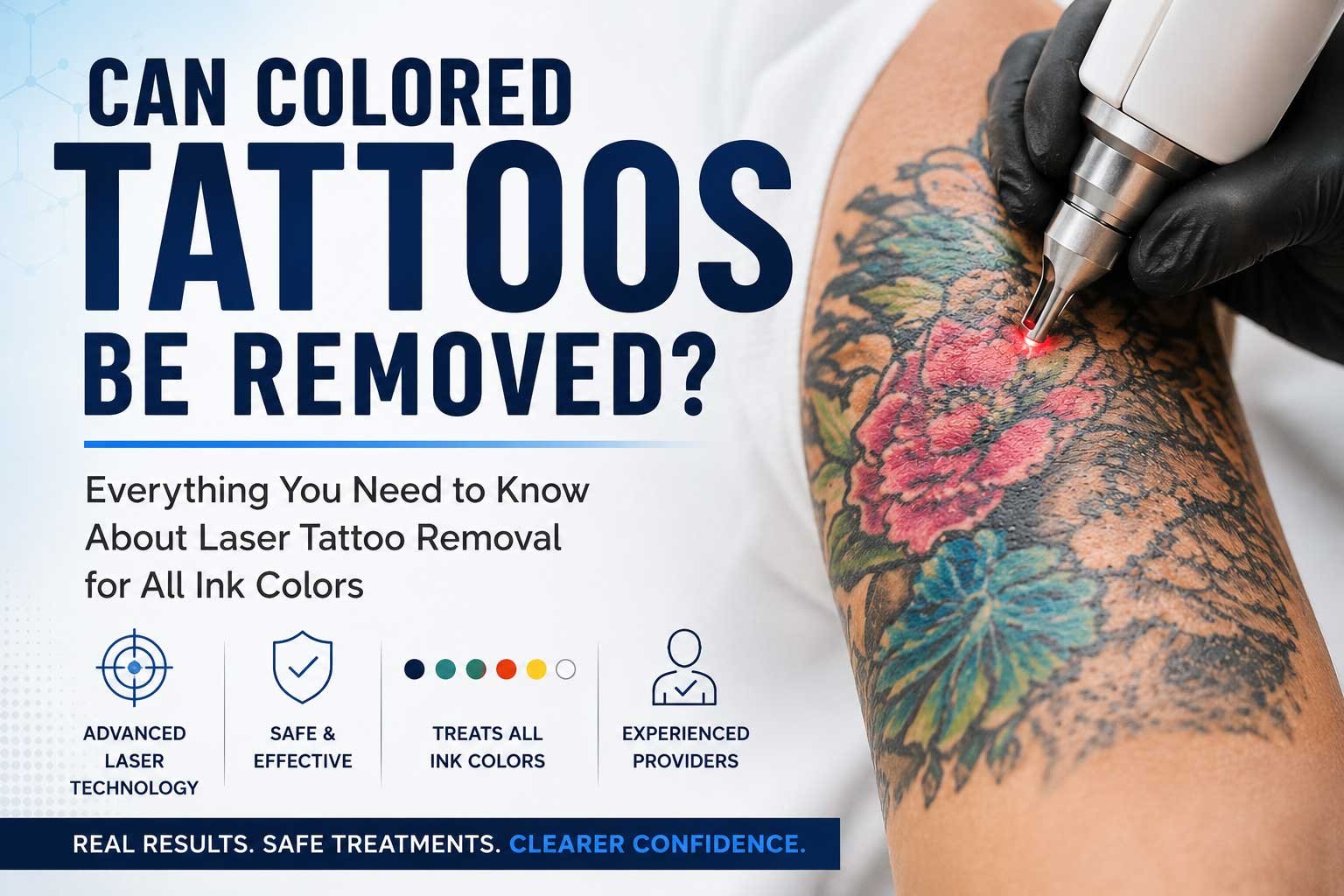
Can colored tattoos be fully removed? The answer is yes—in many cases, they can be dramatically faded or even completely removed using modern laser technology. While colored tattoos are generally more challenging to treat than black ink, today’s advanced multi-wavelength laser systems have made it possible to target a wide range of pigments with impressive results.
Colored tattoos are often more complex than black ink tattoos because each pigment responds differently to laser energy. Factors such as ink color, tattoo age, skin tone, ink depth, and the type of laser used all influence how successfully a tattoo can be removed.
At Total Body Laser Med Spa in Total Body Laser Med Spa, many clients are surprised to learn that even vibrant blues, greens, reds, and multi-colored sleeve tattoos can often be significantly faded or completely removed with the right treatment plan and enough sessions.
If you are considering laser tattoo removal in the Madison area, can colored tattoos be fully removed helps set realistic expectations before beginning treatment and choose the right clinic.
Learn more about our laser tattoo removal in Madison and how personalized treatment plans can help remove unwanted ink safely.
Why Colored Tattoos Are Harder to Remove
Not all tattoo inks respond to laser treatment the same way. Black ink is generally the easiest to remove because it absorbs a broad range of laser wavelengths, allowing the laser to break the pigment into tiny particles more efficiently. Colored inks, on the other hand, absorb and reflect light differently, so each color requires a specific laser wavelength for the best results.
Thanks to advances in modern laser technology, many colored tattoos that were once considered difficult to treat can now be significantly faded or even completely removed. However, some pigments still require more treatment sessions and specialized laser settings than others.
Easiest Tattoo Colors to Remove
The following tattoo colors typically respond well to laser removal:
- Black
- Dark gray
- Dark blue
- Brown
- Deep red
These darker pigments generally absorb laser energy more effectively, which often means faster fading and fewer treatment sessions.
Most Difficult Tattoo Colors to Remove
Some tattoo colors are naturally more resistant to laser treatment, including:
- Light blue
- Green
- Turquoise
- Yellow
- White
- Fluorescent or neon pigments
These colors often reflect more laser energy than they absorb, making them slower to break down. White and flesh-toned inks can be especially challenging because they may contain titanium dioxide, a pigment that can temporarily darken after laser treatment before gradually fading. Some specialty inks also contain metallic compounds that respond less predictably, which is why an experienced provider may recommend a test spot before beginning treatment.
While these colors can take longer to remove, modern multi-wavelength laser systems have greatly improved outcomes for many colored tattoos compared with older laser technologies.
How Laser Tattoo Removal Works
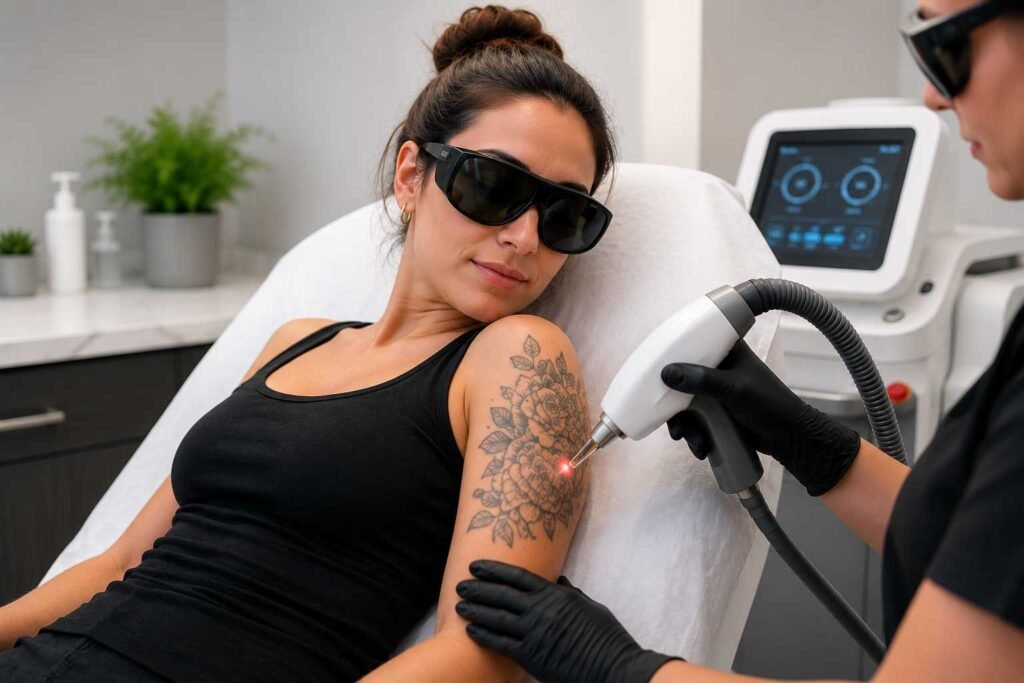
Laser tattoo removal uses short, high-energy pulses of light to target tattoo ink beneath the skin without damaging most of the surrounding tissue. When the laser hits the ink, it shatters the pigment into tiny particles. Over the following weeks, your body’s immune system gradually clears away these fragments through its natural healing processes, causing the tattoo to fade after each session.
The American Society for Laser Medicine and Surgery provides additional information about how medical lasers are used for a variety of skin treatments.
Because every ink color absorbs light differently, no single laser wavelength works best for every tattoo. Modern laser systems use multiple wavelengths so providers can customize treatments based on the colors in your tattoo, helping improve results while minimizing unnecessary skin irritation.
Common Laser Wavelengths Used for Colored Tattoo Removal
| Laser Wavelength | Best For |
|---|---|
| 1064 nm | Black, dark gray, and other dark pigments |
| 532 nm | Red, orange, and some yellow inks |
| 755 nm | Green, teal, and certain blue pigments |
| 694 nm | Stubborn blue and green shades that may not respond well to other wavelengths |
Advanced multi-wavelength laser systems can treat several ink colors during the same treatment plan, making them far more effective for colorful and multi-colored tattoos than older single-wavelength lasers. While the laser breaks apart the ink during each session, most of the visible fading occurs gradually over the following weeks as your body removes the fragmented pigment.
Read our complete guide on how laser tattoo removal works to better understand what happens during each treatment session.
Can Colored Tattoos Be Fully Removed?
In many cases, yes. Thanks to advances in laser technology, many colored tattoos can be completely removed or faded to the point where they are barely noticeable. However, no provider can guarantee 100% removal because every tattoo is unique and responds differently to treatment.
The best results are typically achieved when:
- The tattoo is several years old
- Modern, professional-grade laser technology is used
- All recommended treatment sessions are completed
- Proper aftercare instructions are followed
- The tattoo does not contain highly resistant pigments
While many clients achieve excellent results, some tattoos may fade by 80–95% rather than disappear entirely. Even in these cases, the remaining ink is often faint enough to be difficult to notice or suitable for a cover-up tattoo.
Tattoos That May Require More Treatments
Certain tattoos are naturally more challenging to remove and may require additional sessions or may not completely disappear, including:
- Bright green inks
- Neon or fluorescent pigments
- White highlights
- Layered cover-up tattoos
- Deeply saturated professional tattoos
- Cosmetic tattoos containing titanium dioxide or metallic pigments
An experienced laser tattoo removal provider can evaluate your tattoo during a consultation and give you a realistic estimate of the number of treatments you may need and the level of fading you can expect. Although patience is important, today’s advanced multi-wavelength laser systems have made complete or near-complete removal possible for many colored tattoos that were once considered difficult to treat.
Factors That Affect Colored Tattoo Removal
Every tattoo responds differently to laser treatment. While ink color plays a major role, several other factors influence how quickly a tattoo fades and how many sessions may be needed. During your consultation, your provider will evaluate these factors to create a treatment plan tailored to your tattoo and skin type.
To understand can colored tattoos be fully removed, it’s important to know which factors affect laser removal success.
Ink Color
The color of your tattoo is one of the biggest factors affecting removal success. Dark pigments, such as black, dark gray, and deep blue, typically absorb laser energy more efficiently and often fade faster. Lighter colors, including yellow, white, turquoise, and fluorescent inks, are generally more resistant and may require additional treatments or specialized laser wavelengths.
Tattoo Age
Older tattoos often respond better to laser removal because the body’s immune system has naturally broken down some of the ink over the years. As a result, older tattoos may require fewer sessions than newer, freshly applied tattoos with densely packed pigment.
Tattoo Depth
The depth of the ink also affects how easily it can be removed. Professional tattoos are usually placed deeper into the skin and contain a higher concentration of pigment, making them more challenging to remove than most amateur tattoos. Cover-up tattoos can be especially difficult because they often contain multiple layers of ink.
Skin Tone
Your skin tone is an important consideration when planning laser tattoo removal. Because lasers target pigment, providers may adjust the laser settings for individuals with darker skin tones to reduce the risk of temporary hyperpigmentation or hypopigmentation while still treating the tattoo effectively. An experienced provider will customize the treatment to balance safety and results.
Immune System Response
Laser treatment breaks the tattoo ink into tiny particles, but your immune system does the work of clearing those particles from the body. People with healthy circulation and strong immune function often notice faster fading between sessions. Staying well hydrated, exercising regularly, eating a balanced diet, and avoiding smoking may support your body’s natural ink removal process and contribute to better overall results.
One of the biggest questions after can colored tattoos be fully removed is how many treatment sessions are required.
The American Academy of Dermatology offers educational resources about skin healing and caring for your skin after medical procedures.
How Many Sessions Do Colored Tattoos Need?
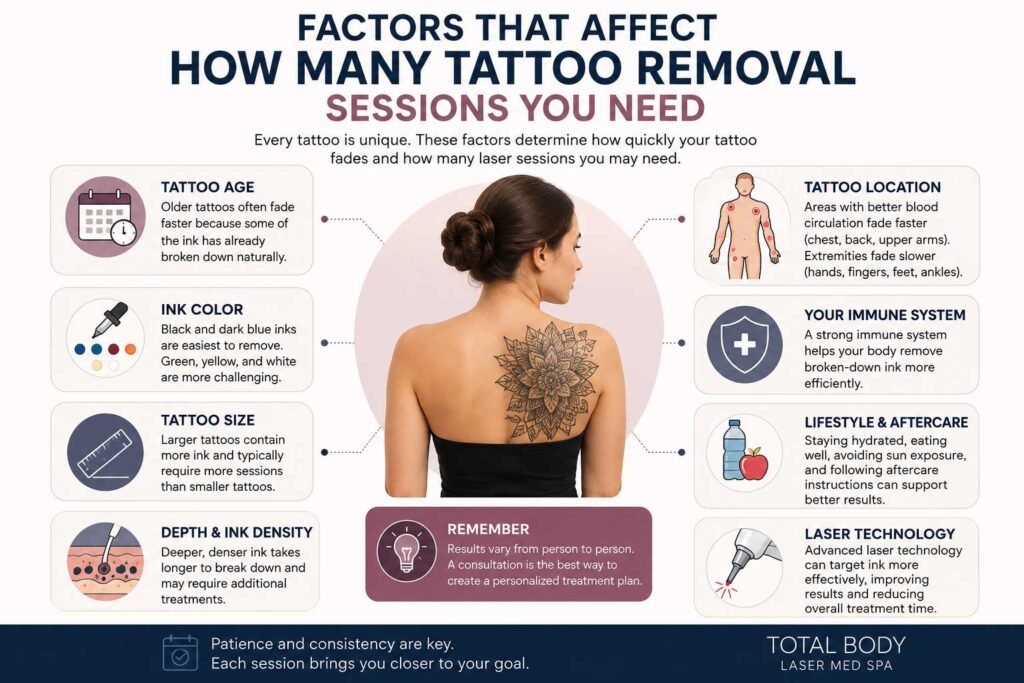
Colored tattoos typically require more treatment sessions than black ink tattoos because different pigments respond at different rates. While some colors fade quickly, others are more resistant and may need additional treatments with specialized laser wavelengths.
The exact number of sessions depends on factors such as the tattoo’s colors, size, age, ink density, placement on the body, and how well your immune system clears the fragmented ink between appointments.
Average Number of Tattoo Removal Sessions
| Tattoo Type | Estimated Sessions |
|---|---|
| Small black tattoo | 5–8 sessions |
| Multi-colored tattoo | 8–15+ sessions |
| Cover-up tattoo | 10–20 sessions |
| Dense professional tattoo | 12+ sessions |
Most laser tattoo removal treatments are scheduled 6 to 8 weeks apart. This recovery period allows your skin to heal and gives your body’s immune system time to flush away the shattered ink particles before the next session. Rushing treatments closer together typically won’t speed up the process and may increase the risk of skin irritation.
It’s also important to remember that every tattoo is unique. Some colorful tattoos fade faster than expected, while others—especially those with green, yellow, white, or layered pigments—may require additional sessions to achieve the desired results.
Want to learn more? Check out these related guides:
- Does Laser Tattoo Removal Hurt?
- How Many Sessions Does Tattoo Removal Take?
- Laser Tattoo Removal Aftercare Guide
Which Tattoo Colors Fade the Fastest?
Not all tattoo colors fade at the same rate during laser removal. Some pigments absorb laser energy very efficiently and begin fading after just a few treatments, while others require more time and specialized laser wavelengths.
In general, darker colors tend to respond better than lighter shades, although advances in modern laser technology have greatly improved the treatment of many colored tattoos.
Colors That Typically Fade Faster
- Black – Usually the easiest and fastest color to remove because it absorbs a broad range of laser wavelengths.
- Dark gray – Responds similarly to black ink and often fades consistently.
- Deep red – Modern lasers that use a 532 nm wavelength can target red pigment very effectively, making it one of the easier colored inks to remove.
- Dark blue and dark purple – These colors often respond well, although results can vary depending on the specific ink formulation.
Colors That Usually Take Longer
Some pigments are naturally more resistant to laser treatment, including:
- Green
- Light blue
- Turquoise
- Yellow
- White
- Fluorescent or neon inks
Green ink was once considered one of the most difficult colors to remove, but today’s advanced pico and alexandrite laser systems have significantly improved outcomes for many green tattoos. Even so, yellow and white pigments remain among the most challenging because they absorb less laser energy and may require additional sessions. In some cases, white inks containing titanium dioxide can temporarily darken before gradually fading with continued treatment.
Although certain colors take longer than others, an experienced laser provider can tailor your treatment plan using multiple laser wavelengths to maximize fading across a wide range of tattoo pigments.
Can Some Tattoo Colors Turn Darker After Laser Treatment?
Yes. Although it’s uncommon, certain tattoo pigments can temporarily become darker after laser treatment instead of fading right away. This reaction is known as paradoxical darkening and is most often associated with cosmetic tattoos and inks that contain specific metallic compounds.
Rather than breaking apart immediately, these pigments undergo a chemical change when exposed to laser energy, causing them to darken before they gradually respond to additional treatments.
Tattoos Most Likely to Experience Paradoxical Darkening
The following pigments have a higher risk of temporary darkening:
- White ink
- Flesh-toned pigments
- Cosmetic tattoos (such as permanent makeup)
- Some pink inks
- Pigments containing titanium dioxide or iron oxide
Paradoxical darkening does not necessarily mean the tattoo cannot be removed. In many cases, additional laser treatments using the appropriate settings can gradually lighten the darkened pigment. However, the process may require more time than removing traditional tattoo inks.
Because of this possibility, experienced laser tattoo removal providers often perform a test spot on cosmetic or specialty tattoos before treating the entire area. This allows them to see how the pigment reacts and determine the safest and most effective treatment approach.
Does Laser Tattoo Removal Leave Scars?
When performed by an experienced provider using modern laser technology, laser tattoo removal has a low risk of causing new scars. The laser is designed to target tattoo pigment beneath the skin while minimizing damage to the surrounding tissue.
In many cases, what people mistake for laser-induced scarring is actually scar tissue that was created when the tattoo was originally applied. Laser treatment may make this existing scar tissue more noticeable as the ink fades, but it typically does not create the scar itself.
What Can Increase the Risk of Scarring?
The risk of scarring is higher when proper care isn’t taken during or after treatment. Common causes include:
- Picking or scratching blisters and scabs
- Poor aftercare or failing to keep the area clean
- Pre-existing scar tissue from the original tattoo
- Treatment by an inexperienced or unlicensed provider
- Incorrect laser settings that are too aggressive for the skin or tattoo
Following your provider’s aftercare instructions is one of the best ways to promote proper healing and reduce the risk of complications. Keeping the treated area clean, avoiding sun exposure, resisting the urge to pick at healing skin, and allowing enough time between sessions all contribute to better results and healthier skin.
Following proper tattoo removal aftercare is one of the best ways to reduce the risk of scarring and support healthy healing.
The U.S. Food & Drug Administration (FDA) provides information about laser devices used in dermatology and aesthetic medicine.
Who Is a Good Candidate for Colored Tattoo Removal?
Most healthy adults are good candidates for laser tattoo removal, but some people are more likely to achieve faster, more complete results than others. During your consultation, your provider will evaluate your tattoo, skin type, medical history, and treatment goals to determine whether laser removal is the right option for you.
You may be an excellent candidate if:
- Your tattoo is at least 1–2 years old
- You are in good overall health
- You avoid excessive sun exposure and tanning during treatment
- You can commit to multiple treatment sessions
- You have realistic expectations about the removal process
Older tattoos often respond better because some of the ink has naturally broken down over time. Likewise, people with healthy immune systems tend to clear fragmented ink particles more efficiently between treatments, which can contribute to better fading.
It’s important to remember that laser tattoo removal is a gradual process, not an overnight solution. Even colorful or heavily saturated tattoos can often achieve significant fading with patience, proper aftercare, and a personalized treatment plan. Working with an experienced provider and following the recommended treatment schedule gives you the best chance of achieving optimal results.
What to Expect During a Colored Tattoo Removal Session
Most laser tattoo removal appointments are surprisingly quick, although the exact treatment time depends on the size, location, and complexity of your tattoo. Your provider will first examine the tattoo, clean the area, and may apply cooling methods before beginning the treatment.
Typical appointment times include:
- Small tattoos: 5–10 minutes
- Medium tattoos: 10–20 minutes
- Large or multi-colored tattoos: 30–60 minutes
The laser delivers rapid pulses of energy that target the tattoo ink beneath the skin. While the actual treatment is often completed in just a few minutes, you should allow extra time for preparation, aftercare instructions, and any questions you may have during your appointment.
Does It Hurt?
Everyone experiences discomfort differently, but most people describe the sensation as:
- A rubber band snapping against the skin
- Tiny drops of hot grease
- Quick, sharp stinging pulses
The discomfort typically lasts only while the laser is firing and stops once the treatment is complete.
To improve comfort, many clinics use cooling devices, chilled air, or cold packs before, during, and after treatment. For larger tattoos or more sensitive areas, a topical numbing cream may also be recommended to help make the session more comfortable. While laser tattoo removal isn’t completely painless, most clients find the brief discomfort manageable, especially knowing that each treatment brings them one step closer to fading unwanted ink.
Aftercare Is Essential for the Best Results
Your laser tattoo removal session doesn’t end when you leave the clinic. Proper aftercare plays an important role in how well your skin heals, how quickly your tattoo fades, and how comfortably you recover between treatments. Following your provider’s instructions can also help reduce the risk of infection, scarring, and unwanted skin pigmentation changes.
Remember, the laser breaks the tattoo ink into tiny particles during treatment, but your body’s immune system gradually removes those particles over the following weeks. Much of the visible fading actually happens between sessions, making the healing period just as important as the treatment itself.
Colored Tattoo Removal Aftercare Tips
For the best possible results:
- Keep the treated area clean and dry.
- Avoid direct sun exposure and always protect the area with sunscreen once it has healed.
- Do not pick, scratch, or pop scabs or blisters.
- Apply only the healing ointments or dressings recommended by your provider.
- Stay well hydrated to support your body’s natural healing process.
- Avoid swimming pools, hot tubs, saunas, and prolonged soaking until the skin has fully healed.
- Wear loose-fitting clothing if the treated area may rub against fabric.
Giving your skin enough time to recover between appointments is essential. Although it may be tempting to schedule treatments closer together, allowing the recommended 6 to 8 weeks between sessions gives your immune system time to clear away fragmented ink and helps maximize fading while minimizing the risk of complications.
Understanding the tattoo removal healing process can help you know what to expect between treatment sessions.
Following general Mayo Clinic wound care recommendations can help support healthy skin healing after cosmetic procedures.
Why Choosing the Right Clinic Matters
Removing a colored tattoo is more complex than removing a black ink tattoo. Different pigments respond to different laser wavelengths, which means successful treatment requires more than simply owning a laser. Experience, advanced technology, and personalized treatment planning all play a major role in achieving the best possible results.
A qualified provider will evaluate your tattoo’s colors, ink density, age, location, and your skin type before creating a customized treatment plan. This individualized approach helps maximize fading while reducing the risk of unwanted side effects, such as scarring or changes in skin pigmentation.
Clinics equipped with modern multi-wavelength laser systems are often able to treat a much wider range of tattoo colors than older single-wavelength devices. This is especially important for tattoos containing green, blue, yellow, white, or multiple colored pigments, which may require different laser settings throughout the removal process.
If you’re considering laser tattoo removal near Madison, Total Body Laser Med Spa provides personalized consultations to evaluate your tattoo, discuss realistic expectations, and develop a treatment plan tailored to your skin type, tattoo colors, and removal goals. Choosing an experienced clinic from the start can make a significant difference in both your results and your overall treatment experience.
Frequently Asked Questions
Are colored tattoos harder to remove than black tattoos?
Yes. In general, colored tattoos are more challenging to remove because each pigment absorbs laser energy differently. Black ink responds to a wider range of laser wavelengths, while colors such as green, yellow, and white often require specialized laser settings and additional treatment sessions.
Can green tattoos be fully removed?
In many cases, yes. Green ink was once considered one of the most difficult colors to treat, but modern multi-wavelength and pico laser systems have significantly improved removal success. Depending on the type of green pigment and how deeply the ink was placed, additional sessions may still be needed.
Is red tattoo ink easier to remove?
Often, yes. Red pigments typically respond well to the 532 nm laser wavelength, making them one of the easier colored inks to remove. However, the exact results depend on the specific ink formulation and other tattoo characteristics.
Can yellow tattoo ink be removed?
Yellow ink can be removed, but it is generally one of the most challenging tattoo colors to treat. Because it reflects more laser energy than it absorbs, yellow pigment often requires more sessions and may not completely disappear in every case.
How long does complete tattoo removal take?
Complete tattoo removal is a gradual process that usually takes several months to more than a year. Most clients need multiple treatment sessions spaced 6 to 8 weeks apart, allowing the skin to heal and the body’s immune system to remove the fragmented ink between appointments.
Can colored tattoos be fully removed?
Many colored tattoos can be completely removed or significantly faded with modern laser technology. The final results depend on ink color, tattoo age, skin type, and completing the recommended treatment plan.
Will my skin return to normal after tattoo removal?
In many cases, the treated skin heals very well and closely resembles the surrounding area once the tattoo has faded. However, some people may experience temporary redness, lightening or darkening of the skin, or slight texture changes during healing. Following proper aftercare instructions and choosing an experienced provider can help minimize the risk of long-term skin changes.
Still have questions? Schedule a colored tattoo removal consultation to receive a personalized treatment plan based on your tattoo colors and skin type.
Your Next Steps Toward Colored Tattoo Removal
Many people ask, can colored tattoos be fully removed, and thanks to today’s advanced laser systems, the answer is often yes. Colored tattoos are no longer considered impossible to remove. Thanks to advances in modern laser technology, many multi-colored tattoos can now be dramatically faded or even completely removed with the right treatment plan. While some pigments are more resistant than others, today’s specialized multi-wavelength laser systems have made successful removal possible for a much wider range of tattoo colors than ever before.
The key to achieving the best results is having realistic expectations, following your aftercare instructions carefully, and working with an experienced provider who understands how different pigments respond to laser treatment. Because every tattoo is unique, a personalized treatment plan is essential for maximizing fading while protecting your skin.
If you’re considering laser tattoo removal near Madison, Total Body Laser Med Spa offers personalized consultations to evaluate your tattoo, explain the expected treatment timeline, and develop a customized removal plan based on your tattoo colors, skin type, and aesthetic goals.